


When cities start recruiting modular manufacturers instead of simply hoping they’ll come, something important is changing.
For years, cities have searched for ways to bring manufacturing jobs back to abandoned industrial sites while also finding solutions to an ever-growing housing shortage. Those two goals rarely intersect.
Cleveland may have just found a way to accomplish both.
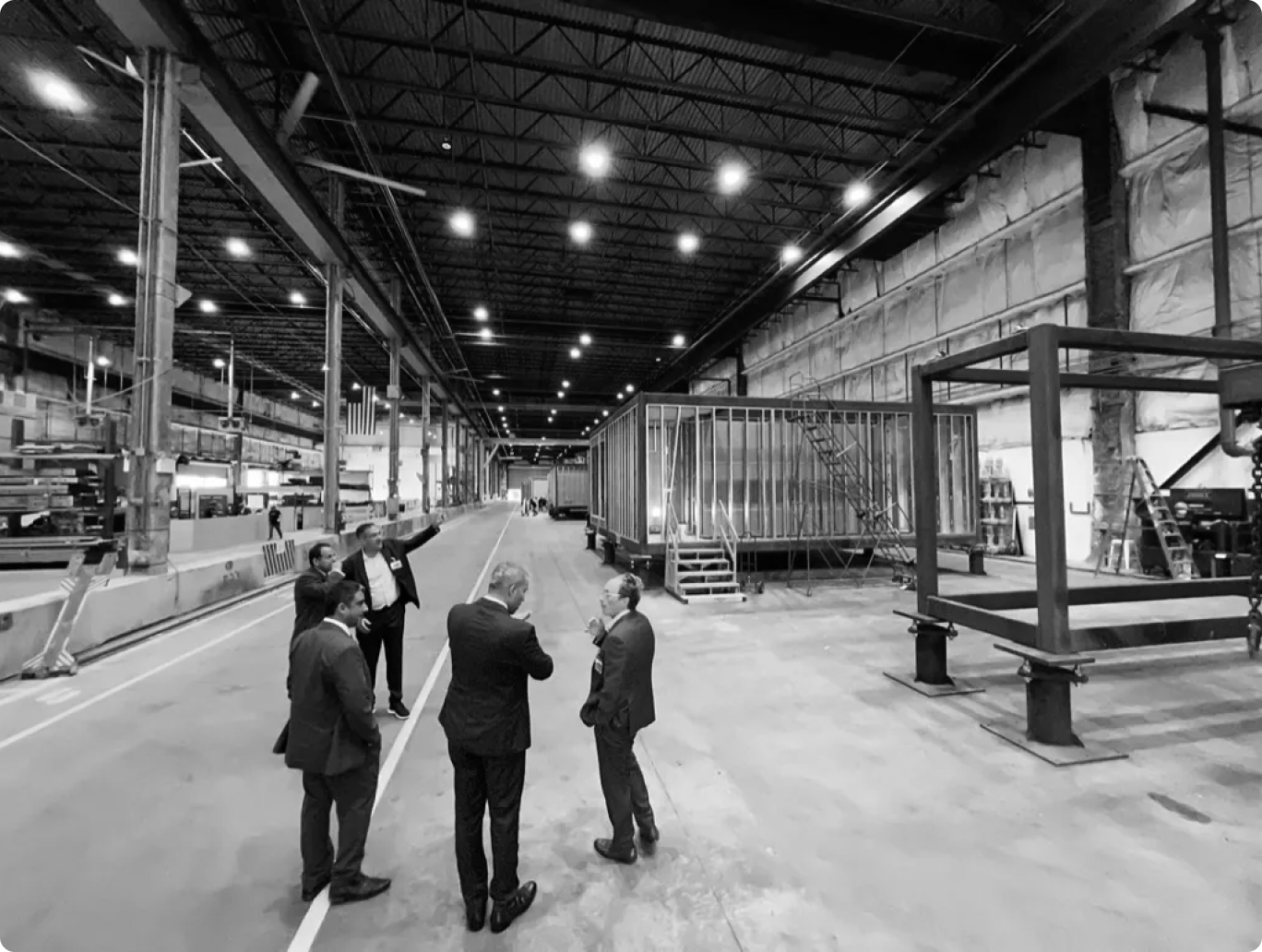
The city recently announced that MMY US has been selected as the first major tenant in the redevelopment of the former Wellman-Seaver-Morgan industrial complex on Cleveland’s East Side. The company plans to transform the long-vacant manufacturing facility into a modern factory producing steel-framed modular housing, creating new jobs while breathing life into one of the city’s historic industrial properties.
For the offsite construction industry, this isn’t just another factory announcement. It may signal a growing willingness by local governments to actively recruit modular manufacturers as economic development partners.
Who Is MMY US?
Unlike many startups entering the modular space, MMY US didn’t appear overnight with little more than an investor presentation and ambitious promises.
The Louisville-based company is the U.S. affiliate of MMY Global and is led by executives who have spent decades developing modular projects throughout Europe, the Middle East, and North America. According to the company, its leadership has participated in more than $5 billion worth of modular projects and has worked with governments, institutional developers, and major international organizations.
Rather than focusing on custom homes, MMY US has concentrated on solving one of America’s largest housing problems—urban multifamily housing.
A Different Approach to Modular
MMY US isn’t simply building boxes inside a factory.
The company’s Multiplex system combines cold-formed steel construction, standardized apartment designs, factory-installed finishes, and rapid installation methods intended to dramatically shorten construction schedules. The company says its process allows up to 85% of the work to be completed inside the factory while using standardized engineering and transportation methods designed for nationwide deployment. It also promotes the use of helical ground screws where appropriate and rail transportation to reduce both costs and project timelines.
Whether every one of those goals is ultimately achieved remains to be seen, but the concept is ambitious and clearly aimed at high-volume multifamily development rather than individual custom homes.
Why Cleveland Matters
The Cleveland announcement isn’t just about one factory.
It’s about confidence.
Cities don’t typically hand over the keys to major redevelopment projects without doing extensive due diligence. Cleveland selected MMY US as the cornerstone tenant for its Midline redevelopment initiative because officials believe modular manufacturing can become an anchor industry capable of creating long-term employment while producing much-needed housing.
That sends a message to developers, lenders, investors, and other municipalities that modular construction is beginning to move beyond being viewed as an alternative building method and toward becoming an accepted component of economic development strategy.
More Than Another Factory
The modular industry has seen plenty of factory announcements over the past decade.
Some became successful operations.
Others never moved beyond press releases.
The real test for MMY US will not be opening the doors. It will be consistently producing quality housing, maintaining production schedules, attracting skilled workers, and delivering projects that meet both developer expectations and financial realities.
Those are challenges every modular factory faces regardless of how innovative its technology may be.
A Positive Sign for the Industry
Even with those challenges, this announcement is encouraging.
Communities across America have thousands of vacant industrial buildings sitting idle while simultaneously struggling with severe housing shortages. If modular manufacturers can successfully repurpose those facilities, they create a rare win-win situation—bringing manufacturing jobs back while helping address housing needs.
That may ultimately become one of modular construction’s greatest competitive advantages.
Gary’s Observation

I’ve often said that the future of offsite construction won’t be decided by the next piece of software, robot, or AI platform. It will be decided by whether communities begin seeing modular factories as essential infrastructure instead of niche manufacturers.
Cleveland appears to be making that shift.
MMY US now has an opportunity—and a responsibility—to prove that confidence was well placed. If this factory succeeds, don’t be surprised if other cities begin actively recruiting modular manufacturers to occupy their own vacant industrial sites.
Success has a way of attracting imitators, and right now the offsite industry could use a few more success stories.