






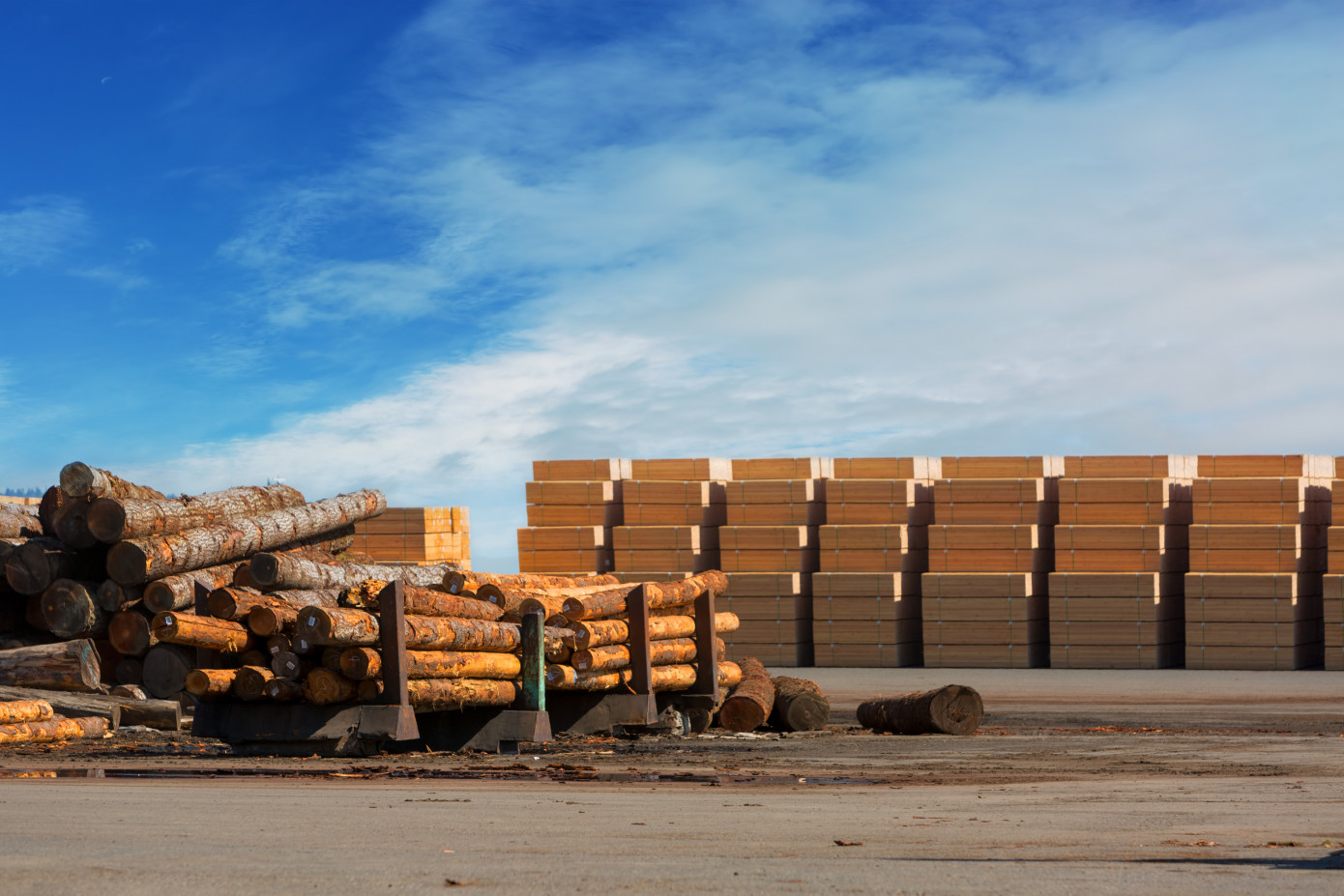
For generations, Canada’s softwood lumber industry operated on a relatively straightforward economic model: harvest Canadian timber, process it in Canadian sawmills, and ship a substantial portion of the finished lumber south to the United States. The United States provided Canada with an enormous, geographically convenient market, while American builders and building-material suppliers gained access to the framing lumber needed to supplement domestic production.
It should have been one of North America’s most natural trading relationships. Instead, lumber has become one of the longest-running and most contentious disputes between the two countries.
The latest round of U.S. duties has made Canadian softwood lumber considerably more expensive when it crosses the border. For many Canadian producers, antidumping and countervailing duties totaling approximately 35% have been combined with a separate 10% Section 232 tariff on imported softwood timber and lumber. That creates a total burden of approximately 45% for affected Canadian lumber entering the United States.
The U.S. Department of Commerce has preliminarily calculated lower antidumping and countervailing rates for its next review period. If those rates become final, the combined trade burden could fall closer to 35% after including the Section 232 tariff. That would be an improvement, but a 35% barrier would still be a formidable obstacle between Canadian forests and American jobsites.
From the American side, the dispute is usually presented as a contest between protecting domestic sawmills and controlling housing costs. From the Canadian side, however, a different and potentially more consequential story is developing. If Canada can no longer depend as heavily on exporting lumber to the United States, it must find another use for its timber—and one answer may be to stop exporting so much lumber and start manufacturing more buildings.
The Dispute Is About More Than Lumber Prices
The underlying disagreement involves the way timber is owned and priced in the two countries. In the United States, much of the timber used commercially comes from privately owned land, and market competition plays a significant role in determining the price paid for harvesting rights.
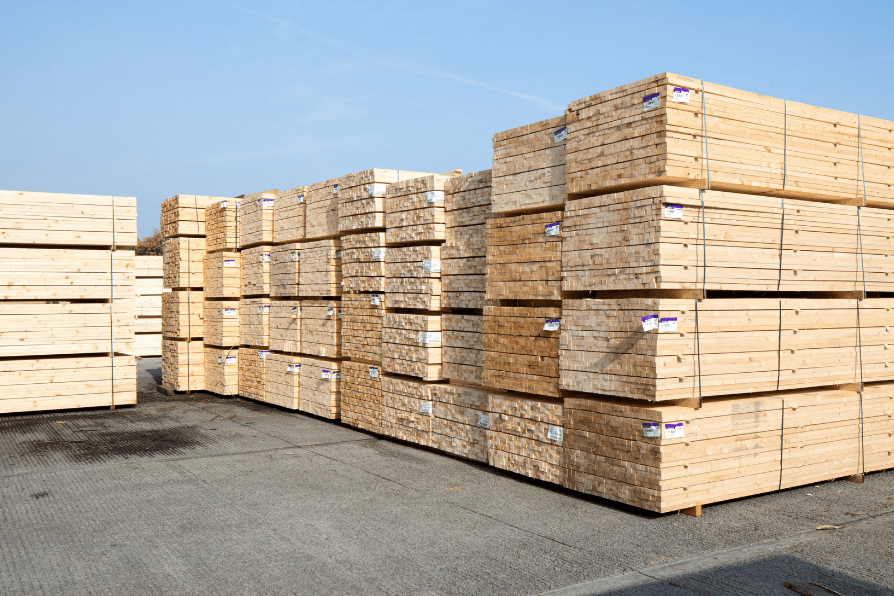
In Canada, provincial governments own most timberland. Canadian producers pay government-established stumpage fees for the right to harvest timber on Crown land. American lumber producers have argued for decades that this system allows Canadian mills to obtain raw material at artificially low prices.
From the American industry’s perspective, provincial stumpage arrangements amount to a government subsidy that gives Canadian producers an unfair advantage in the U.S. market. Canada disputes that characterization, arguing that the two countries simply have different forest ownership and management systems. Canadian officials and producers have repeatedly challenged U.S. duties through trade tribunals and dispute-resolution proceedings.
The legal and political arguments are complex, but the practical result is simple: Canadian lumber becomes more expensive when it enters the United States. Canada supplies approximately 85% of U.S. softwood lumber imports and nearly one-quarter of the total softwood lumber available in the American market, making it far too significant a supplier to replace quickly.
American tariffs may reduce Canadian shipments and improve market conditions for some domestic producers, but they cannot instantly create new sawmills, harvesting capacity, transportation networks and skilled labor. Trees may be plentiful, but converting standing timber into kiln-dried, graded, and delivered framing lumber requires an entire production system.
The U.S. duties are therefore creating pressure on both sides of the border. American builders face higher costs and increased purchasing uncertainty, while Canadian mills face reduced access to their largest export market. Canada is now being forced to decide whether it will wait for another trade settlement or use this disruption to reinvent its forest-products industry.
Canada Cannot Simply Find Another United States
For Canadian producers, market diversification sounds easier than it is. The United States is nearby, enormous and deeply connected to Canada by railroads, highways, distribution networks and decades of commercial relationships. No other export market offers the same combination of volume, proximity and construction demand.
Natural Resources Canada reports that the United States remains the destination for approximately 86% of Canadian softwood lumber exports. Redirecting that volume to Europe, Asia, or other international markets would require new customers, different transportation arrangements and, in some cases, different products and specifications.
Shipping commodity lumber longer distances also introduces additional costs. Canadian lumber must compete against regional producers that may have lower transportation expenses or better access to local markets. Canada cannot simply replace the United States with another country of equal size and convenience.
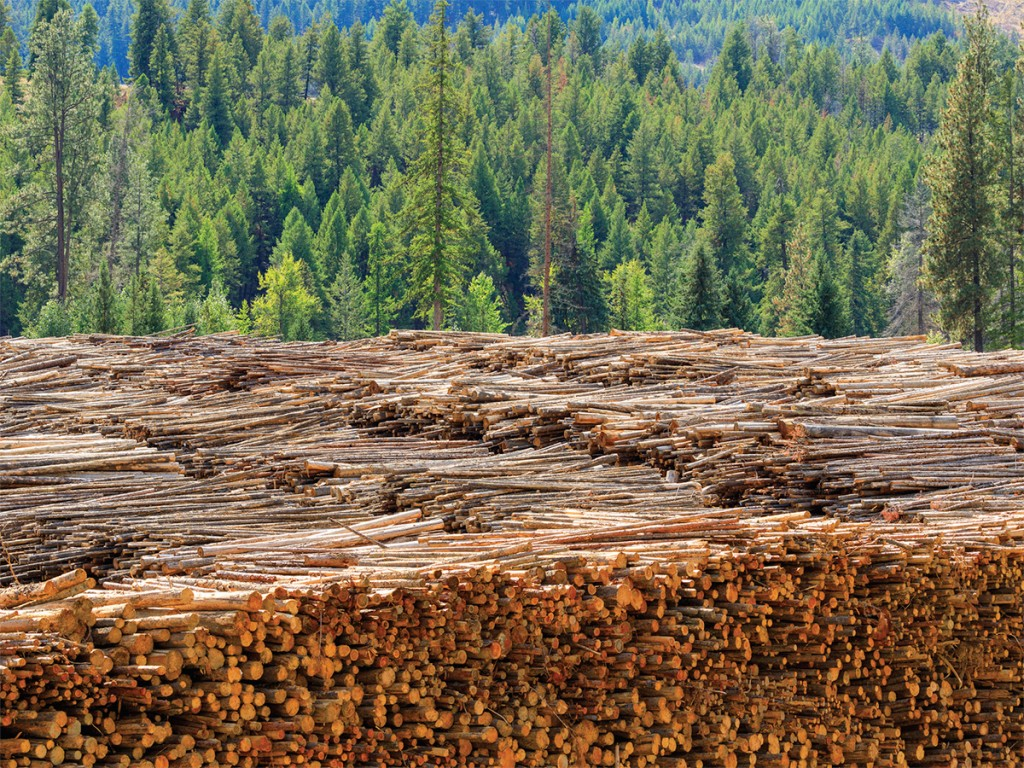
It can, however, change what it sells. Instead of exporting primarily dimensional lumber, Canada can use more of that lumber domestically to produce higher-value construction products. Those could include wall and floor panels, roof systems, engineered wood products, cross-laminated timber, mass-timber assemblies, modular units and substantially completed buildings.
This is the difference between exporting a raw construction input and exporting an industrialized construction solution. The growing tariff wall may inadvertently accelerate that transition.
Canada Is Beginning to Create Its Own Customer
The Canadian government is responding with more than legal challenges and temporary financial assistance. Federal initiatives aim to increase domestic demand for Canadian wood, improve transportation between provinces, support mill modernization, and expand advanced wood manufacturing.

One of the most important steps is the decision to give Canadian lumber and other domestically produced materials greater consideration in federally supported housing and infrastructure. Canada has also introduced a 50% freight-rate discount for certain interprovincial shipments of lumber and steel.
That freight initiative addresses a long-standing Canadian problem. In some cases, it has been easier to move products north and south across the U.S. border than east and west within Canada. Reducing internal transportation costs could help Canadian lumber reach domestic manufacturers and construction projects that previously relied on other supply arrangements.
The federal government is also supporting advanced wood-manufacturing facilities and encouraging greater use of mass timber and engineered wood products. Most significant for the offsite industry is Build Canada Homes, a federal initiative intended to accelerate affordable housing production through modern construction methods, including modular building, panelization, prefabrication, and other forms of industrialized housing.
Some Build Canada Homes initiatives are targeting modern construction methods for as much as 40% of their housing portfolios. Taken separately, each policy might look like another government program. Taken together, they begin to resemble an industrial strategy.
Canada has forests, sawmills, established modular and panelized construction companies, engineering expertise and growing mass-timber capabilities. It also has a severe need for additional housing. The missing element has often been sufficient, dependable demand to justify investment in larger and more automated production systems, and government-backed housing programs could help create that demand.
From Sawmills to Housing Factories
The greatest opportunity may not be simply increasing Canadian lumber consumption. It may be connecting the forest-products sector more directly to factory-built housing.
A conventional lumber sale moves a relatively low-value commodity into a volatile marketplace. A panelized wall incorporates design, engineering, labor, sheathing, insulation, and manufacturing knowledge. A modular unit adds substantially more value before leaving the factory. The further a product advances through the manufacturing process, the more of its economic value can remain within Canada.
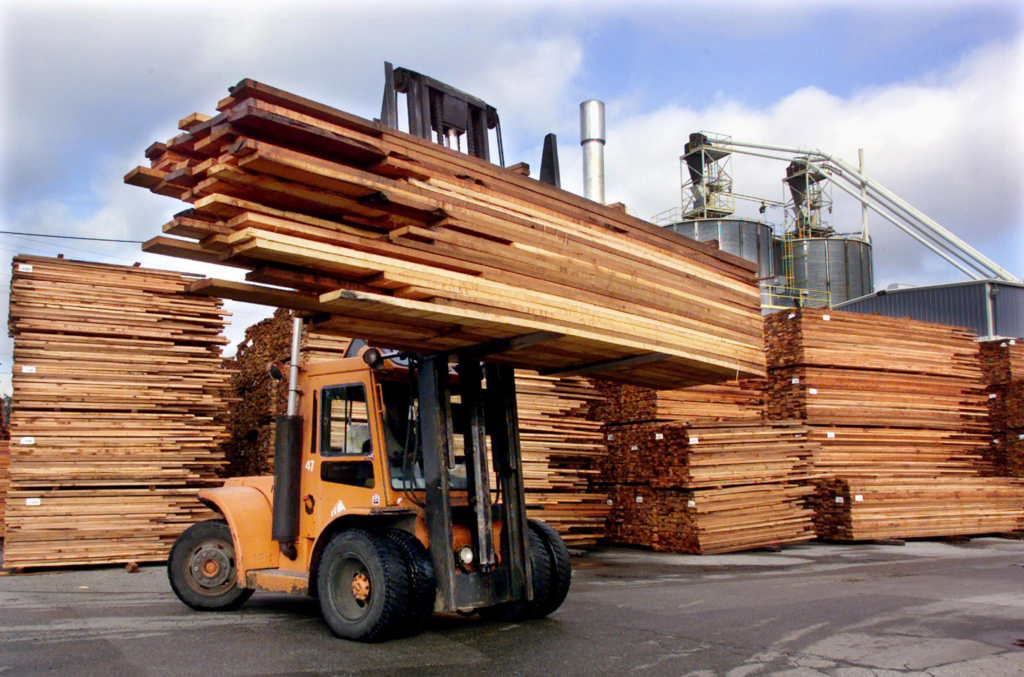
That does not mean every Canadian sawmill should start building houses. Sawmilling and home manufacturing are very different businesses, and housing factories must manage architectural requirements, engineering, building codes, mechanical systems, inspections, transportation, installation and customer expectations.
The opportunity lies in building a coordinated supply chain. Canadian mills could provide standardized lumber packages and engineered components to panel plants. Panel manufacturers could supply modular factories, multifamily developers, and regional builders. Mass-timber manufacturers could work with architects and commercial developers to create repeatable structural systems, while digital design platforms could connect these companies through standardized details and production-ready building information models.
Instead of treating lumber, engineered wood, panels and modular construction as separate industries, Canada could begin viewing them as stages within one industrialized housing system. That would represent a far more ambitious response to American tariffs than providing financial assistance to mills while waiting for the dispute to end.
Tariffs Could Encourage Productization
Offsite construction succeeds when it transforms repeatable designs and processes into reliable products. It struggles when it treats every project as a custom prototype.
Canada’s housing programs could give manufacturers an opportunity to develop standardized product platforms for recurring needs such as workforce housing, Indigenous housing, military housing, senior housing, student residences and affordable multifamily projects. A dependable pipeline of similar projects would allow factories to invest in automation, workforce training and supply-chain integration with greater confidence.
It could also support regional manufacturing. Canada’s size makes transporting completed volumetric modules across the entire country difficult and expensive, so a network of regional panel and modular plants connected to common designs and standardized components may prove more practical than a handful of enormous factories trying to serve every province.
Under that model, Canadian lumber could be processed near its source, converted into components within regional manufacturing hubs, and assembled into homes closer to the communities where those homes are needed. This approach would create more value and employment than simply loading dimensional lumber onto railcars bound for the United States.
It would also help Canada address its own construction-labor shortages. Factory production does not eliminate the need for skilled workers, but it can concentrate them in controlled environments, boost productivity, and reduce the labor required on scattered job sites.
Canada Must Avoid the Familiar Offsite Traps
The opportunity is real, but so are the risks. Government support alone does not create a sustainable offsite industry, and North America already has a long history of housing factories built around optimistic forecasts that never became dependable orders.
A plant cannot survive on announcements, pilot projects, and political enthusiasm. It needs repeatable volume, timely approvals and contracts that recognize the financial realities of manufacturing.
Build Canada Homes and related programs must do more than say they support modern construction methods. Their procurement procedures must accommodate the way factories operate. Designs need to be finalized before production begins, approvals must happen on predictable schedules, and payment terms cannot force manufacturers to finance government projects for months. Projects must also be large enough, or repeatable enough, to justify product development and factory setup.
Most importantly, Canada must resist asking factories to customize every building while expecting manufacturing prices and production speeds. If every province, municipality, housing agency and architect demands a unique solution, Canadian factories will become expensive indoor construction sites. They will carry manufacturing overhead without receiving the benefits of manufacturing repetition.
The goal should not be one national house design. Canada’s climate, geography, culture and housing needs are far too diverse for that. The goal should be standardized structural platforms, connections, mechanical pathways, material specifications and digital details that allow controlled variation without forcing factories to reinvent the building every time.
Canada has an opportunity to turn tariff pressure into product discipline. It should not waste that opportunity by repeating the mistakes that have already closed too many offsite factories.
The Trade Battle Could Move Up the Value Chain
If U.S. tariffs make Canadian lumber less competitive, but Canada uses that lumber to manufacture panels, components or modules, the trade battle could eventually move from raw materials to finished building systems. Trade classifications and applicable duties vary by product, origin, and level of completion, so any manufacturer considering cross-border sales would need product-specific trade and customs advice.
The larger strategic point is that trade barriers frequently change the form of competition rather than eliminating it. A Canadian mill that loses an American lumber customer may eventually supply a Canadian panel plant. That panel plant may sell components to Canadian developers, helping domestic factories become stronger and more efficient. Those manufacturers may then pursue international markets with more valuable and sophisticated products.
The United States could reduce its dependence on Canadian dimensional lumber while unintentionally helping create stronger Canadian competitors in industrialized construction. Canada would move from selling the ingredients to selling more of the finished meal.
This Is Not an Automatic Canadian Victory
Assuming the tariff dispute guarantees a manufacturing renaissance would be a mistake. Canadian mills are already under pressure from high operating costs, reduced timber availability, wildfires, mill closures and weak housing markets. Offsite factories face their own problems involving financing, approvals, transportation and inconsistent demand.
Converting a commodity-export industry into an advanced manufacturing ecosystem requires capital, patience and coordination. Canada will also need to confront its fragmented building regulations, because provincial codes, municipal approvals and regional requirements can make it difficult for a manufacturer to sell the same housing system across multiple markets.
If Canada wants nationwide factory-built housing capacity, it must make it easier for approved designs and building systems to travel between jurisdictions. It must also distinguish between supporting factories and supporting production. Funding equipment is relatively easy; creating a dependable market for what that equipment produces is much harder.
A factory is not successful because it owns robotic saws, automated framing tables or sophisticated software. It succeeds when it has a product customers will buy, a backlog it can execute, and positive margins on every unit leaving the plant. The lumber dispute may motivate change, but it cannot substitute for sound manufacturing economics.
A Rare Opportunity Hidden Inside a Trade Dispute
For years, Canadian leaders have discussed adding more value to the country’s natural resources before exporting them. The lumber dispute gives that familiar objective new urgency.
Canada could keep fighting for unrestricted access to the American market while also reducing its dependence on it. Those are not contradictory strategies. Canadian producers should continue pursuing a stable softwood lumber agreement because predictable trade between the two countries would benefit mills, builders and homebuyers on both sides of the border.
Canada should not, however, build its future around the assumption that the old relationship will return unchanged. Tariffs have exposed the risk of relying too heavily on one customer for one primary product, and the response should include diversification not only by geography but also by value.
The real opportunity is not simply to find another buyer for Canadian two-by-fours. It is to use those two-by-fours, along with Canada’s engineered wood, manufacturing knowledge, and construction expertise, to create complete housing systems. That would turn a trade defense into a long-term industrial strategy.
Gary’s Observation

America’s lumber tariffs were designed to protect American producers, not strengthen Canadian offsite construction. Yet unintended consequences often become the most important consequences. If Canadian lumber encounters a 35% or 45% wall at the U.S. border, Canada has a powerful incentive to stop thinking of that lumber solely as an export commodity and begin turning more of it into wall panels, floor systems, mass-timber components, modular units and completed homes.
That transformation will not happen automatically. Canada must provide dependable demand, standardize what should be standardized, and prevent government procurement from burying factories beneath custom requirements and slow payments. If it succeeds, the United States may eventually import fewer pieces of Canadian lumber, but Canada could emerge with stronger mills, more advanced factories and a better-integrated industrialized-housing sector.
America may then discover that it did not eliminate Canadian competition. It simply pushed Canada further up the value chain.