



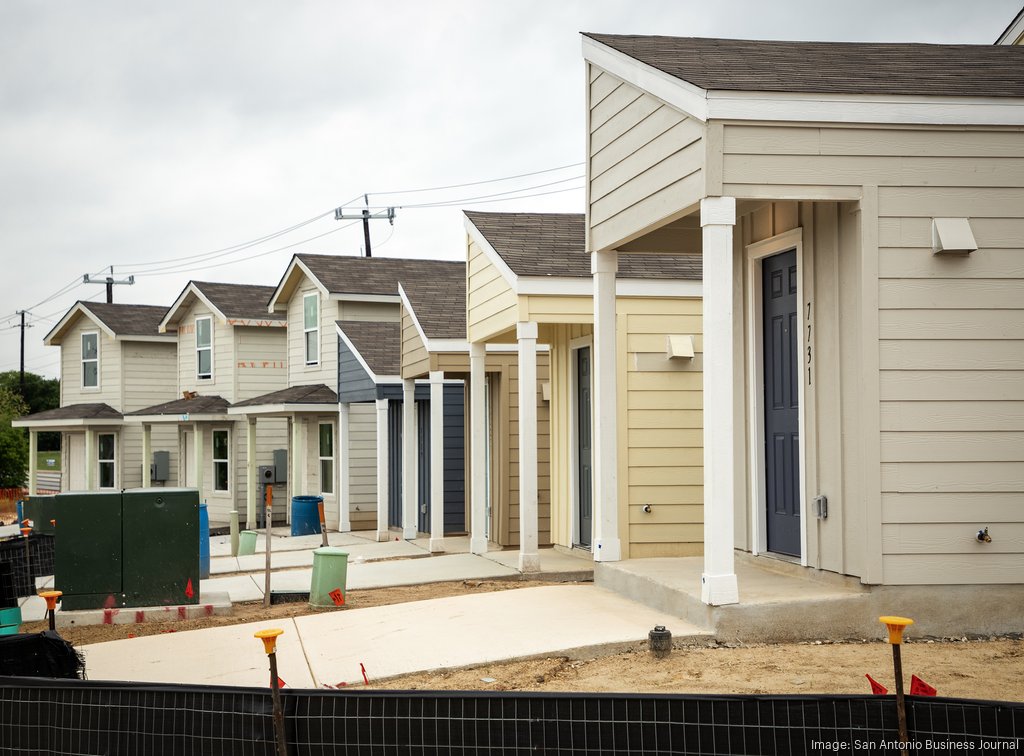
America has managed to create one of the strangest contradictions in the housing crisis: thousands of apartments officially classified as affordable are sitting empty while extremely low-income people remain in shelters, cars, and temporary housing. In Austin, Texas, more than 4,500 affordable units—nearly 16% of the city’s total—are reportedly vacant. At the same time, people such as 49-year-old Mathew Davis, who earns a few hundred dollars a month by donating blood plasma, cannot afford even a $450-a-month tiny home without running water or a private bathroom.
When Government Definitions Collide With Financial Reality
The problem is not simply that America has failed to build enough housing. It is also that much of what we call affordable housing is being built for households earning considerably more than the people facing the greatest housing emergency.
The numbers reveal how wide that gap has become. Approximately 11 million extremely low-income renter households compete for only about four million affordable, available rental homes, according to the National Low Income Housing Coalition. These households generally earn less than the federal poverty guideline or 30% of their area’s median income, whichever is higher.
Why the Poorest Renters Are Being Left Behind
They include seniors living on Social Security, people with disabilities, minimum-wage employees, and others whose incomes cannot keep pace with rent. About three-quarters of these households spend more than half their income on rent and utilities, leaving very little for food, transportation, medicine and other necessities. Yet only about 12% of the homes financed through the federal Low-Income Housing Tax Credit program in 2024 were reserved for people at this lowest income level.

Most tax-credit housing targets people earning at least 50% or 60% of area median income, commonly called AMI. That may qualify as low income under government formulas, but it does not necessarily describe someone facing homelessness. In Austin, for example, a single person earning about $47,000 may qualify for certain affordable units, while someone earning less than $28,000 is considered extremely low income. In the Washington, D.C., region, a unit intended for a household earning 60% of AMI can serve someone making nearly $70,000 a year. Government definitions may be technically correct, but they create the misleading impression that every affordable apartment is within reach of a senior receiving a modest monthly check or a worker earning barely enough to survive.
Affordable Units Competing With Market-Rate Apartments
Developers argue that the economics make deeply affordable housing almost impossible without additional subsidies. One Washington-area developer provided a simple example: an apartment serving someone at 60% of AMI brings in $1,715 a month, while the mortgage and operating expenses consume approximately $1,575. That leaves only $140 before unexpected repairs and other costs.
Cutting the rent in half for an extremely low-income tenant does not cut the mortgage, insurance, maintenance, utilities or property-management expenses in half. This is why developers frequently combine tax credits with housing vouchers, but only about one in four eligible households receives a voucher. Waiting lists can stretch for years, leaving developers unable to lower rents and tenants unable to afford units already built.
Meanwhile, apartments aimed at households earning 60% or 80% of AMI are beginning to compete directly with conventional market-rate housing. Austin has an affordable-housing vacancy rate approaching 16%, while Denver reportedly has a 13% vacancy rate for tax-credit units at 60% of AMI and 21% for those at 80%.
Portland has more than 1,700 vacant affordable apartments, most intended for people earning 60% of AMI. A qualifying one-bedroom unit there may rent for as much as $1,444 a month, compared with an average market-rate rent of approximately $1,581. For less than $140 more, a renter may find a market-rate apartment in a preferred location without navigating the extensive documentation and approval process required for subsidized housing.
That bureaucracy creates another obstacle. Applicants for affordable housing may be required to provide bank statements, pay stubs, bills, and records of personal payment-app transactions before they can be approved. A market-rate apartment may approve that same renter within minutes, while an affordable development must verify that every dollar of income complies with complicated program rules. Some renters who qualify for subsidized units are therefore choosing to pay slightly more for a conventional apartment because it is faster and easier to obtain. The result is a system that can simultaneously produce vacant affordable units, desperate applicants, and homeless people who remain too poor to qualify financially for the housing supposedly created to help them.
Gary’s Observation

We cannot solve the housing crisis simply by counting how many units carry an affordable label. Austin set a goal of producing 20,000 homes for extremely low-income residents between 2018 and 2027, but only 543 had been completed by 2024. During roughly the same period, the city met its entire 15,000-unit goal for households earning between 60% and 80% of AMI.
Offsite construction can reduce construction time, waste, and some labor costs, but no factory can make land, financing, utilities, insurance, regulations, and long-term operations disappear. If government agencies, developers and the offsite industry genuinely want to serve the poorest households, we must design the financing, product and approval system around what those people can actually pay.
Otherwise, we will continue building “affordable” apartments that remain empty while the people most in need of a home continue sleeping everywhere except inside one.