



Good Intentions Still Need a Workable Budget
I have to wonder how often a city announces an affordable housing policy without asking the people expected to build the homes whether the numbers actually work. Requiring developers to reserve apartments at below-market rents sounds reasonable, especially to families struggling with housing costs. But someone must cover the difference between what those apartments cost and what they earn.
A recent Texas Public Policy Foundation commentary argues that when these requirements make developments financially unworkable, the result can be fewer homes getting built. That concern is worth examining, even if every city’s program deserves to be judged on its own results.

An Approval Does Not Guarantee a Building
The commentary points to New Orleans, reporting that its mandatory program had produced no completed mixed-income units as of November 2025. That finding alone does not prove the mandate caused every stalled development, but it should prompt some difficult questions. Can anticipated rents support construction and financing? Do the incentives adequately offset the restrictions? I would want those answers before celebrating another policy announcement. Families need completed homes, and developers need projects lenders will finance.
What If the Project Is Modular?
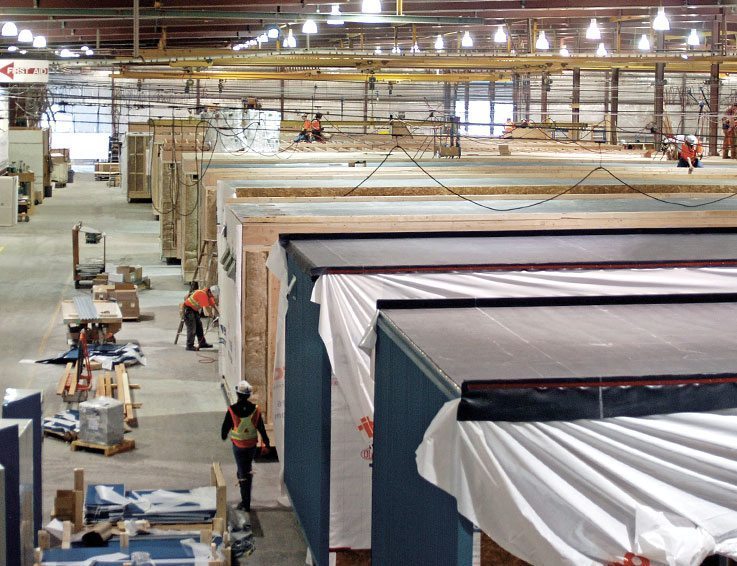
Now put a modular factory into the picture. My concern is that someone at the negotiating table will assume factory construction automatically creates enough savings to absorb whatever financial gap remains. Modular construction can offer schedule advantages and, on suitable projects, cost savings, but those benefits must be established in the actual project budget. Land, foundations, utility connections, transportation, crane work, and financing still have to be paid for. I would also tell a developer to confirm the applicable affordability requirements early; choosing modular construction should never be treated as an assumed exemption from local development conditions.
A Delay Can Reach the Factory Floor
Consider what could happen if that modular development stalls after the developer has committed to production. Depending on the contract and how far work has progressed, the consequences could include rescheduling charges, materials already purchased, or completed modules needing storage. A delayed site could leave the factory rearranging its workload while the developer carries additional costs. That is why I see predictable approvals and early coordination as essential parts of making modular housing affordable. The factory’s production schedule, the financing, and the site’s readiness have to work together for the project to capture the benefits everyone expects.
Gary’s Observation

I want cities to ask for affordable housing, and I want the industry to help deliver it. But I also want officials, developers, and factory owners sitting at the same table before the requirements are finalized. Test the budget, identify the funding gap, and determine whether added density, lower fees, faster approvals, or direct assistance can make the development viable. Modular construction deserves a serious place in that conversation, with realistic expectations about what it can accomplish. The measure I would use is straightforward: how many families actually receive the keys to a home they can afford?