



Business growth and expansion are always good—unless it happens too quickly.
Yes, too much business growth can actually be bad, especially for startups and small businesses. Rapid, uncontrolled expansion can create problems that ripple throughout an organization, affecting everything from cash flow and quality control to employee morale and customer satisfaction.
I know that sounds counterintuitive. After all, businesses exist to make money, gain market share, and grow over time. Growth is the goal, right?
The answer is yes—but only if that growth is controlled.
In the offsite and modular construction industry, where margins can be thin and production schedules are often measured months in advance, growing faster than your systems can handle may be one of the quickest ways to put a company in jeopardy.
When More Sales Become a Problem
Most factory owners dream of the day when orders start pouring in faster than they can build. The phones are ringing, dealers are signing contracts, and production slots are filling up months ahead.
At first, it feels like success.
Then reality arrives.
Additional orders require additional materials, more transportation coordination, more project management, and often more employees. Suddenly, management finds itself scrambling to keep up with demand instead of strategically planning for it.
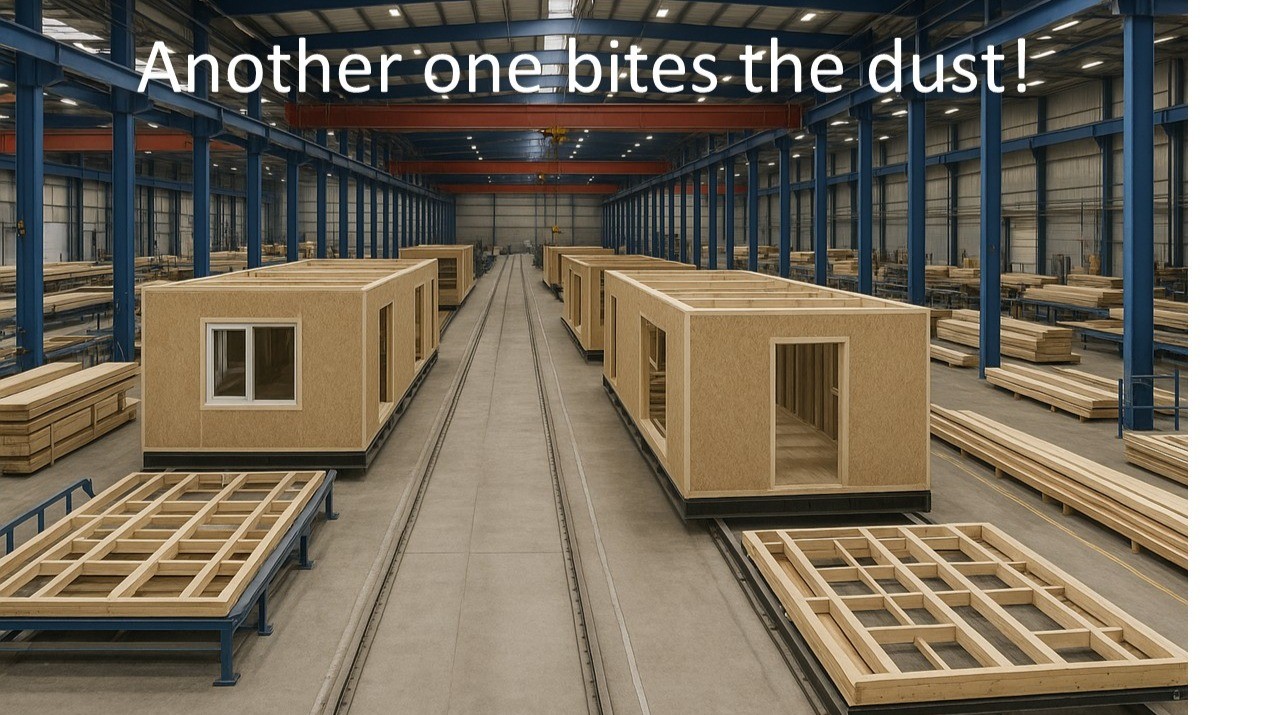
A production line designed to build ten modules a week may struggle when management tries to push it to fifteen. Overtime becomes routine. Mistakes become more frequent. Employees become exhausted. What looked like a victory begins to create stress throughout the organization.
Growth isn’t the problem. Growth without preparation is.
Your Expenses Start Outrunning Your Revenue
One of the clearest signs that a company is growing too fast is when expenses begin increasing faster than income.
To support expansion, companies often hire new employees, purchase equipment, lease additional space, increase inventory levels, and invest in technology upgrades. These expenditures occur immediately, while the revenue from new projects may not arrive for weeks or months.
In modular construction, cash flow can become particularly challenging. Materials must be purchased long before final payments are received. Transportation and set costs continue to rise. New supervisors and production workers require training before they become fully productive.
On paper, sales may be reaching record levels.
In reality, the bank account may be telling a different story.
Many companies have failed not because they lacked customers but because they ran out of cash while trying to serve too many of them.
Quality Begins to Slip
Quality issues rarely appear overnight.
They start small.
A missed measurement. An overlooked inspection. A detail that would normally be caught but somehow slips through because everyone is rushing to meet production targets.
As production accelerates, quality control often becomes one of the first casualties. Employees who once took pride in every detail may feel pressure to move units down the line faster than ever before.
Customers notice. Builders notice. Developers notice.
And once a company’s reputation starts to suffer, repairing that damage can take years.
The irony is that many factories spend years building a reputation for quality only to jeopardize it during periods of rapid growth.
Communication Starts Breaking Down
Small companies often function because everyone knows what’s happening.
As organizations expand, that natural communication begins to disappear.
Departments become isolated. Information gets delayed. Decisions take longer. Employees receive conflicting instructions. The sales department promises one thing while production is planning another. Purchasing struggles to keep materials flowing while project managers try to manage customer expectations.
The larger a company becomes, the more systems and communication processes it needs. Without them, growth creates confusion rather than efficiency.
Leadership Becomes Overwhelmed
Many entrepreneurs are exceptional at launching businesses. Far fewer are prepared to manage businesses that suddenly double or triple in size.
The skills required to lead a twenty-person organization are very different from those needed to lead a hundred-person organization.
Owners who once knew every employee by name may find themselves buried in meetings, approvals, and daily crises. Decision-making slows. Strategic planning gets pushed aside. Firefighting becomes a full-time occupation.
The company hasn’t outgrown its market. It has outgrown its management systems.
Customers Start Feeling the Pain
Nothing exposes uncontrolled growth faster than unhappy customers.
Delivery dates begin slipping. Communication becomes inconsistent. Warranty issues take longer to resolve. Expectations that were once easily met become increasingly difficult to achieve.
Customers rarely care how fast a company is growing. They care whether promises are being kept.
A factory that delivers fifty projects exceptionally well often creates more long-term success than one that accepts eighty projects and struggles to complete them.
Growth should improve the customer experience, not damage it.
Controlled Growth Wins the Race
The strongest factories are not necessarily the fastest-growing factories.
They are the factories that build systems before they need them. They invest in people before expansion becomes necessary. They strengthen quality control before production increases. They improve communication before complexity overwhelms them.
Controlled growth may feel slower.
It may even feel frustrating when opportunities must occasionally be postponed.
But sustainable growth creates stable companies, healthier employees, stronger customer relationships, and better financial performance over the long term.
The companies that endure for decades understand an important truth.
Success isn’t measured by how quickly you grow.
It’s measured by how well you handle growth when it arrives.
Modcoach Observation

Business growth and expansion is always good—unless it happens too quickly. The factories that survive and prosper over the long haul are rarely the ones chasing every opportunity that comes their way. They are the ones that know when to accelerate, when to pause, and when to strengthen their foundation before taking the next step. Controlled growth may not make headlines, but it keeps factories operating, employees working.