




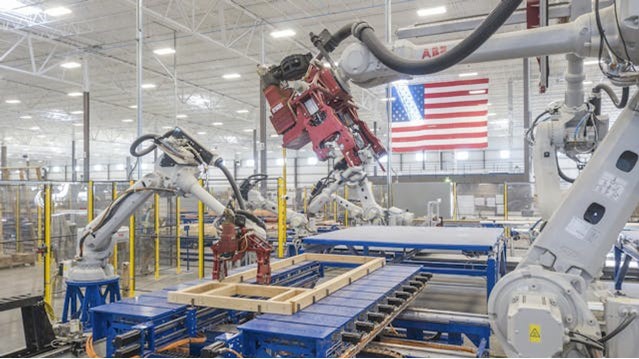
As the offsite construction industry grows and adapts to modern demands, a pressing question divides industry insiders:
Do older, well-established modular factories need automation to survive and thrive?
To find an answer, I asked the subscribers to my weekly newsletter that question, revealing varying perspectives on how automation impacts efficiency, quality, and employee satisfaction. Let’s break down their insights and explore what they mean for the future of modular factories.

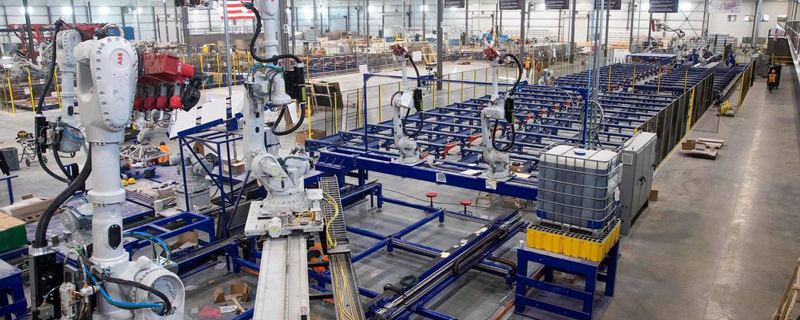
all photos – Autovol
True – Modular Plants Prioritize Quality, Even Without Full Automation (14%)
A small but significant portion of respondents believe that modular plants can maintain high quality without embracing full automation. These respondents likely feel that established practices, skilled labor, and existing machinery are enough to produce quality results, arguing that automation isn’t essential when these plants already focus on delivering durable, well-crafted structures.
This viewpoint aligns with the idea that modular construction has thrived historically on a foundation of traditional skills and hands-on craftsmanship. However, while the quality might remain consistent, the industry’s evolving demands for faster production and higher volume raise questions about whether relying solely on traditional methods is sustainable in the long term.
Agree – Efficiency and Employee Satisfaction Are Key Strengths of Modular Plants (18%)
Some respondents argue that modular factories achieve excellent efficiency and high employee satisfaction, even without automation. They suggest that the modular industry’s inherently structured environment already supports streamlined processes, which might make automation less of a necessity.
For these industry members, the absence of automation can foster an environment where employees feel more engaged and satisfied with hands-on roles, thereby enhancing job satisfaction and maintaining a positive company culture. Still, as demand increases, this argument may face scrutiny if these factories struggle to keep up with modern efficiency standards and worker retention.
Partially Agree – Modular Plants Are Efficient, but Automation Would Help Even More (23%)
A large segment of respondents, almost a quarter, agree that while modular factories are already quite efficient, automation could further boost their performance. This stance reflects a balanced view, recognizing the benefits of traditional methods while acknowledging that selective automation could enhance efficiency, quality, and safety.
This group sees potential in a hybrid approach—implementing automation selectively for repetitive or high-precision tasks while retaining the core elements of traditional modular construction. By blending manual craftsmanship with strategic automation, modular plants could see gains in productivity without sacrificing employee satisfaction.
Disagree – Modular Plants Need Automation to Improve Efficiency and Job Satisfaction (30%)
A considerable portion of respondents argues that automation is critical for boosting efficiency and job satisfaction in modular plants. They believe that as the industry grows, modular factories need to adopt automation to remain competitive and to improve working conditions by eliminating repetitive or physically demanding tasks.
For many in this group, automation represents a pathway to achieving higher productivity with fewer labor constraints, particularly amid labor shortages in the construction industry. Additionally, by automating some aspects of production, factories might attract a younger workforce interested in tech-driven careers, which could further enhance employee satisfaction.
False – Without Automation, Modular Plants Struggle with Efficiency and Quality (15%)
At the opposite end of the spectrum, 15% of respondents firmly believe that without automation, modular factories cannot sustain the efficiency and quality needed for long-term survival. This group suggests that the manual processes currently in place may limit modular plants in meeting the rising demand and the strict quality standards expected by modern consumers.
Automation, according to this view, is a non-negotiable requirement if modular factories want to compete in a market increasingly defined by speed, consistency, and high performance. This perspective may push older factories to reconsider their traditional methods and take a serious look at integrating new technologies into their operations.
Modcoach Note
The diversity of responses highlights a clear division in perspectives across the industry. While automation has proven transformative in other manufacturing sectors, modular construction has unique nuances, blending craftsmanship with standardization. Moving forward, modular factories might adopt a gradual approach to automation, focusing on selective technologies that complement rather than replace skilled labor.
As the industry evolves, modular factories will likely need to find a balance that leverages the best of both worlds—preserving the hands-on quality they are known for while embracing automation to meet modern-day efficiency and scalability demands. Whether through selective automation or a complete overhaul, the journey to modernization will shape the future of modular construction.
.

CLICK HERE to read the latest edition

Contact Gary Fleisher