


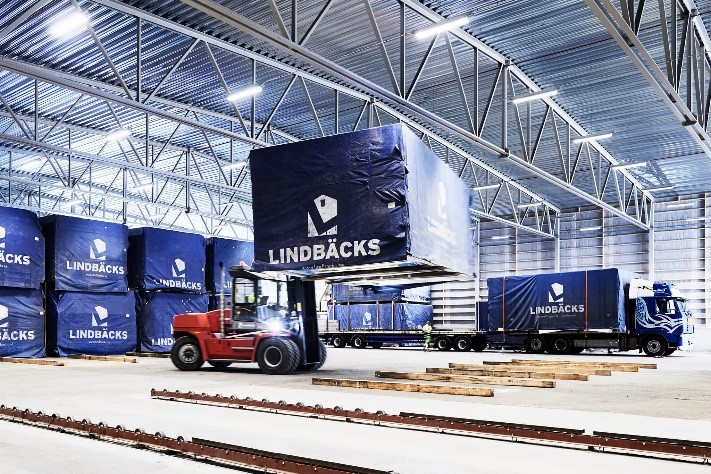
Over the past decade, modular construction has garnered significant attention across the globe. Its appeal lies in its promise to streamline building processes, reduce labor costs, and potentially solve major housing crises by offering faster, more sustainable solutions. Countries like Sweden and Japan have embraced modular as the future of construction, implementing it in various sectors, from affordable housing and workcamps to homeless villages, hotels, and multi-story apartment complexes.

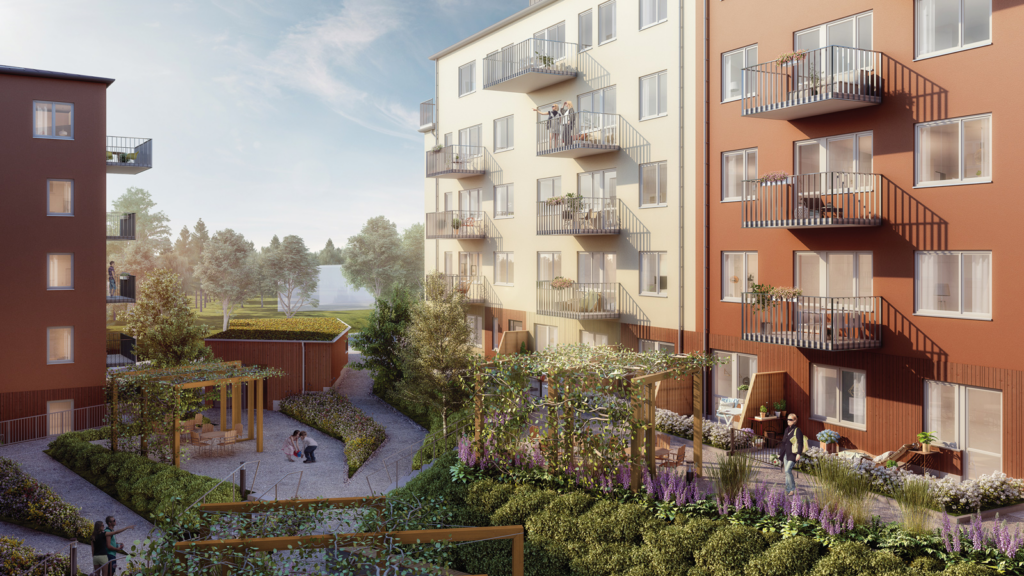
all photos – Lindbäcks in Piteå, Sweden
Despite these advancements abroad, the United States lags behind. Year after year, modular construction remains a small fraction of new builds in the U.S., leaving industry professionals puzzled. Why hasn’t modular construction taken off in the U.S. the way it has in other countries? Are the challenges rooted in cultural differences, financial models, or perhaps regulatory hurdles?
These questions have led to a growing need for candid discussions at industry conferences. As the demand for faster and more affordable housing solutions intensifies, especially with the rising costs of labor and materials, modular construction is still not claiming the spotlight it arguably deserves in certain regions. To dive deeper into the challenges and explore potential solutions, here are 10 tough questions that industry leaders, factory owners, developers, and policymakers should be asking themselves at the upcoming modular construction conferences.

1. Why is the growth of modular construction in the U.S. stagnant compared to countries like Sweden and Japan?
While modular construction is booming in countries like Sweden, where more than 80% of houses are built using modular methods, and Japan, where the share is 12.6%, the U.S. remains hesitant. What are the key differentiators between these countries? Is it a difference in culture, government incentives, or customer perception of quality and value? To truly unlock the potential of modular in the U.S., we must pinpoint why other countries have embraced it so much faster.
2. Is the U.S. regulatory environment too restrictive for modular to thrive?
One of the biggest complaints from American modular home manufacturers is the complexity of local, state, and federal regulations. Each state has its own building codes, and there’s no national standard for modular construction. This creates headaches for factories looking to scale their operations. What can be done to streamline the approval process, and are there regulatory roadblocks that must be eliminated for modular construction to thrive?
3. How do we address the perception of modular as “low-quality” construction?
There is a lingering misconception that modular homes are low-quality or temporary structures, similar to mobile homes. In countries like Sweden, modular construction is seen as a high-end, precision-engineered option. How can the U.S. change the narrative? Should there be a stronger emphasis on educating consumers about the quality, durability, and energy efficiency of modern modular builds?
4. What role should government policy play in accelerating modular construction adoption?
Governments in Japan and Sweden have implemented supportive policies to encourage modular building. Should the U.S. government create similar incentives, such as tax breaks for modular factories or grants for modular homebuyers? How might public policy shift to encourage developers and builders to adopt modular methods more widely?
5. Are the initial capital costs of establishing modular factories too prohibitive?
Building a modular factory from scratch requires significant upfront capital, often tens of millions of dollars. Is this initial investment too risky in the U.S. market, given the uncertainties around adoption rates? How can financial institutions and venture capitalists be encouraged to invest in modular construction, and what innovations are needed to reduce factory costs?
6. Why is labor still a bottleneck for the modular industry?
One of the touted benefits of modular construction is the reduction of on-site labor, yet the U.S. modular industry still reports difficulty finding skilled workers to run factories, transport modules, and complete finishing work on-site. Why has modular not solved the construction labor shortage as promised? Are there training programs and apprenticeship models that could be adopted to create a reliable workforce for this sector?
7. What are the environmental implications of modular construction, and how can sustainability be emphasized?
Sustainability is a major selling point for modular construction. The controlled factory environment allows for reduced waste, and modular homes tend to be more energy-efficient. However, the U.S. market hasn’t fully embraced this aspect. Are developers, consumers, and policymakers fully aware of modular’s potential to help meet environmental goals, and what more can be done to highlight these benefits?
8. How can modular construction scale to meet urban housing needs, especially in high-density cities?
Modular construction has the potential to solve urban housing shortages by delivering affordable housing quickly and efficiently. But scaling modular construction for multi-story residential buildings in dense urban environments presents unique challenges. What are the obstacles preventing modular from being the go-to solution for urban housing, and what innovations could make it viable on a larger scale?
9. Is financing modular construction projects harder than traditional builds?
Financing modular construction, whether it’s for developers or homeowners, is often cited as a challenge. Traditional lenders are sometimes hesitant to fund modular projects because they don’t understand the process or view it as too risky. Can new financial models, such as public-private partnerships or innovative mortgage products, be introduced to make financing more accessible? How can banks and lenders be educated on the benefits and stability of modular construction?
10. What innovations are needed to drive down costs and improve speed in modular construction?
Although modular construction is typically faster and more cost-efficient than traditional methods, there’s still room for improvement. What breakthroughs in automation, AI, and robotics are on the horizon to drive down factory costs, speed up production, and reduce delivery timelines? Should the industry be investing more heavily in R&D to increase efficiency and adoption?
Modcoach Note
Modular construction is poised for growth, but real hurdles remain, especially in countries like the U.S. where adoption has been slow. At future conferences, these 10 tough questions should spark deep discussions among stakeholders. It’s time to address the obstacles head-on and find actionable solutions that will enable modular to fulfill its promise of faster, more affordable, and more sustainable housing.
As the world continues to face housing shortages, skyrocketing costs, and labor issues, modular construction remains one of the most compelling solutions. But for it to truly thrive in the U.S. and beyond, the industry must confront the challenges that lie ahead.
These conversations are not just theoretical—they have the potential to reshape the future of construction. Every country, every market, and every builder will benefit from asking tough questions and seeking answers that lead to long-term success for modular construction.
.

CLICK HERE to read the latest edition

Contact Gary Fleisher