





There are moments when an industry sits right on the edge of becoming something transformational. Not theoretical. Not “someday.” Not another overused promise wrapped in marketing language. Something real.
I believe modular housing is standing at that edge right now.
The technology exists. The factories exist. The engineering exists. The demand certainly exists. America needs millions of new homes, and it needs them faster and at prices ordinary working people can actually afford.
Yet somehow, one of the most efficient ways to build housing in the modern world still struggles to gain meaningful market share in the United States.
Why?
It is not because modular construction does not work. It is because the regulatory maze surrounding housing construction in America has become so tangled that even experienced developers, builders, lenders, inspectors, and factory owners often struggle to navigate it.
That is where Congress could become the biggest game-changer of all.
The Industry Already Knows How to Build
People unfamiliar with modular construction often imagine factories experimenting with futuristic concepts that are still years away from reality. In truth, the industry has been successfully building homes, apartments, hotels, schools, and healthcare facilities for decades.
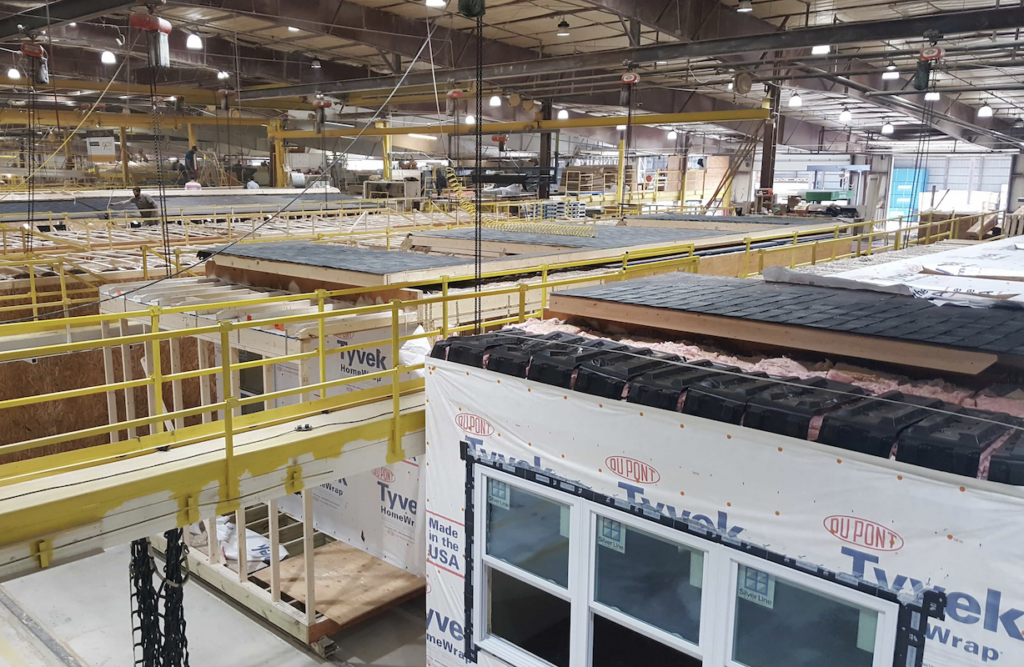
Inside a modular factory, homes are built in climate-controlled environments where weather delays disappear, material waste is reduced, and skilled labor can work year-round instead of standing idle during rain, snow, or extreme heat.
Production lines can standardize processes, improve quality control, and shorten project timelines dramatically compared to many site-built projects. A modular home can often be completed in weeks rather than months, which matters more than ever today.
America is facing rising labor shortages, increasing material costs, higher interest rates, and enormous pressure to produce more affordable housing. At the same time, local communities are struggling to find enough workers, teachers, nurses, police officers, and first responders because housing costs have climbed beyond reach.
Modular construction should be thriving in this environment. Instead, too many projects still move painfully slowly before a single module ever leaves the factory.
The Real Bottleneck Isn’t Construction
The biggest delays often happen long before production begins.
Zoning reviews, permitting, overlapping inspections, state-by-state approval systems, local code interpretations, transportation restrictions, financing complications, environmental reviews, utility approvals, planning commissions, public hearings, historic overlays, energy code conflicts, and stormwater requirements all pile onto projects before ground is ever broken.
A developer can spend months or even years seeking approvals before construction begins. During that time, interest expenses grow, land carrying costs increase, investors become nervous, and projects sometimes collapse entirely.

Meanwhile, factories sit partially idle waiting for signed contracts.
This is where many people misunderstand the housing crisis. America does not simply have a construction problem. It has a process problem, and Congress has far more influence over that process than many realize.

The Senate’s 21st Century ROAD to Housing Act
One of the more interesting signs coming out of Washington is the Senate’s proposed 21st Century ROAD to Housing Act. While legislation alone will not solve America’s housing shortage overnight, the bill signals something important: lawmakers are finally beginning to recognize that housing affordability cannot improve unless the entire development and construction process becomes faster, more predictable, and less burdened by unnecessary obstacles.
Parts of the legislation focus on reducing regulatory bottlenecks, encouraging innovation, modernizing zoning and permitting approaches, and supporting workforce development tied to housing production. Those goals align closely with many of the frustrations that modular and offsite construction companies have voiced for years.
For the offsite industry, this could become an important turning point if the legislation eventually encourages more uniform approvals, improved financing opportunities, faster project reviews, and broader acceptance of industrialized construction methods.
The modular industry does not need special treatment. It simply needs a fair opportunity to compete without constantly fighting through overlapping layers of outdated rules written decades before modern offsite construction methods existed.
If Congress truly wants to encourage affordable housing production, it may finally need to recognize that industrialized construction is no longer a niche experiment. It is becoming a necessity.
Streamlining Does Not Mean Eliminating Safety
Whenever the discussion turns toward reducing regulations, some people immediately assume the goal is to weaken building safety standards.
That is not what most modular professionals are asking for.
Factories already operate under some of the strictest inspection systems in construction. Modular homes are engineered, reviewed, inspected, and certified before they ever arrive at a building site. In many cases, quality control inside a factory is more consistent than what happens outdoors at scattered job sites exposed to weather and subcontractor variability.
The industry is not asking Congress to remove safety standards. It is asking for consistency, efficiency, and systems that allow housing to move through approvals without every jurisdiction reinventing the wheel.
Today, a modular company may face one set of rules in one state and an entirely different set of rules across the border. A design approved in one region may require expensive redesigns elsewhere despite meeting nearly identical structural requirements.
That fragmentation slows innovation and drives up costs.
What Congress Could Actually Do
Congress cannot solve every local zoning dispute in America, nor should it try. However, it could create national incentives and frameworks that dramatically simplify the deployment of modular housing.
Federal incentives could encourage states to recognize reciprocal modular approvals across state lines. Transportation rules for oversized modular units could be modernized and standardized. Financing regulations for modular developments could be simplified to encourage lenders and appraisers to treat modular housing more consistently with site-built homes.
Environmental and permitting reviews could also be consolidated instead of forcing developers through overlapping bureaucratic layers. Affordable housing grants could prioritize faster approval pathways for industrialized construction methods.
Even small improvements in these areas could save developers millions of dollars and months of delays. Eventually, those savings reach the homebuyer.
America Has Reached a Breaking Point
Housing affordability is no longer just a coastal city problem. Smaller towns, rural communities, and suburban areas are all feeling the pressure.
Young families cannot afford starter homes. Retirees struggle to downsize. Essential workers commute longer distances because housing near their jobs is unaffordable. Developers face enormous financial risks before a shovel ever touches the ground.
At some point, the country will either streamline housing production or continue watching the shortage worsen year after year.
Other countries have already embraced industrialized construction far more aggressively than the United States. They recognized that housing demand cannot be solved entirely with traditional methods operating under decades-old regulatory structures.
America still has the opportunity to lead, but leadership requires action.
A Modcoach Observation

The modular industry does not need Congress to become a cheerleader. It does not need another committee study, another housing summit, or another speech about affordability.
It needs government leaders willing to admit that the current system has become far too complicated, expensive, and slow for the scale of the housing crisis America now faces.
Modular housing will not solve every problem. No industry can.
But if Congress helped streamline even a portion of the regulations, approvals, financing systems, and transportation barriers standing in the way, modular construction could become one of the biggest housing game changers America has seen in generations.
The factories are ready. The technology is ready. The demand is already here.
The real question is whether Washington is ready.