



by Gary Fleisher
In offsite construction, vertical integration stands as a strategy fraught with complexities and contradictions. This approach, where a company controls multiple stages of its production or supply chain, can be a powerful tool for streamlining operations and gaining market control.
However, it’s a path layered with both immense potential and significant pitfalls.
Understanding Vertical Integration
Vertical integration is fundamentally about control. It involves a company taking over different stages of its value chain, typically production, distribution, or retailing. For example, an offsite housing company that once purchased trusses from a supplier may start building them itself. Or a modular housing manufacturer might decide to sell directly to consumers, bypassing intermediaries.
This strategy can be particularly attractive in situations where horizontal trading – dealing with competitors at the same stage of the value chain – is either not beneficial or too competitive.
Benefits of Vertical Integration
Cost Efficiency: By controlling more stages of the production and distribution process, offsite construction companies can reduce costs significantly. This cost-saving comes from eliminating middlemen, reducing transportation costs, and streamlining processes.
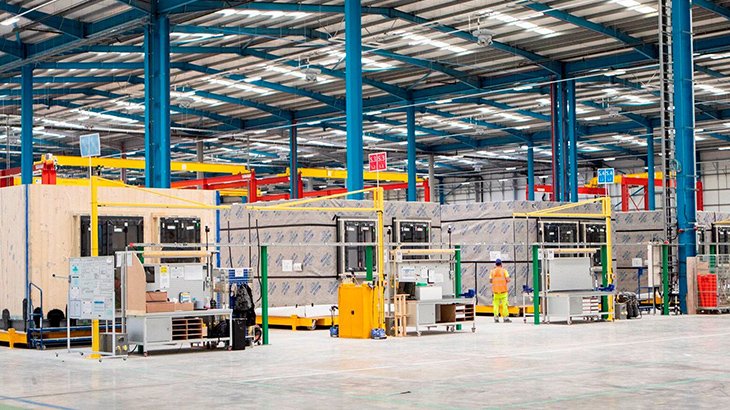
Quality Control: Having control over the entire process from production to set and finish ensures better quality control. Companies can oversee the entire production process, ensuring that each stage meets their standards.
Market Control: Vertical integration can provide companies with greater control over their markets. By owning the supply chain, companies can set barriers to entry for competitors, control prices, and influence market trends.
The Financial Implications
The financial allure of vertical integration is significant. By internalizing processes, offsite factories can often see a reduction in expenses associated with buying and selling, along with decreased logistical costs. However, these savings come at a price. The initial investment for vertical integration can be substantial, as it may involve acquiring new facilities, technologies, or expertise.
Calculating the Investment
The critical question for any company considering this strategy is whether the long-term savings outweigh the short-term investment costs. This calculation isn’t just financial; it also includes considerations of time, resources, and focus.

Challenges and Risks
Despite its potential, implementing vertical integration is fraught with challenges:
Complexity of Management: Managing multiple stages of production and distribution increases complexity. Companies must develop expertise in areas outside their original core competencies, which can strain management resources.
Rigidity and Vulnerability: A vertically integrated company might find itself locked into specific technologies or processes, making it less agile in responding to market changes. This rigidity can lead to obsolescence, especially in fast-evolving industries.
Scale Mismatch: Different stages of production and distribution often operate most efficiently at different scales. Balancing these scales can be challenging, and inefficiencies in one stage can propagate throughout the value chain.
Capital Intensity: Vertical integration often requires significant capital investment, which can strain a company’s finances. This is particularly challenging for smaller offsite factories or those in capital-intensive industries.
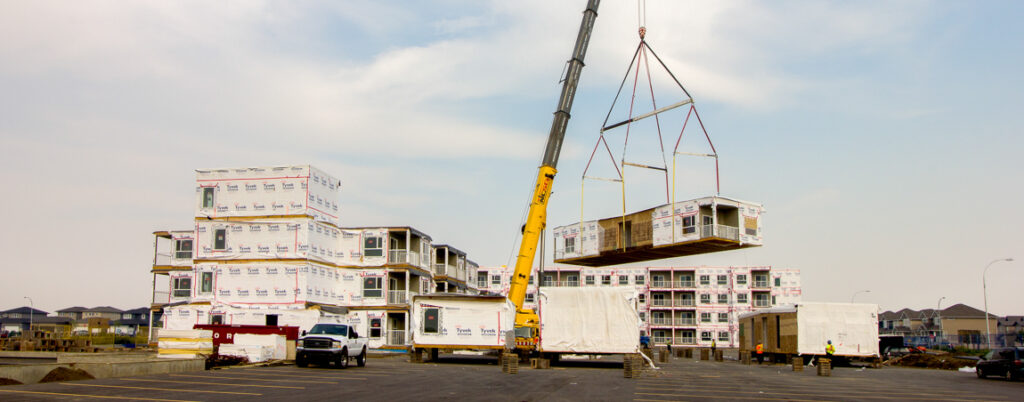
photo- Guerdon Modular
Market Conditions and Competition
The effectiveness of vertical integration varies with market conditions. In stable markets with predictable demand, vertical integration can provide a significant competitive edge. However, in volatile markets, such as housing, the inflexibility of a vertically integrated structure can be a liability.
Industry-Specific Considerations
The suitability of vertical integration also varies by the size of the offsite factory. Factories with high fixed costs and the need for large-scale operations can benefit greatly from vertical integration. However, in companies, like Katerra and L&G Modular, where flexibility and rapid innovation are crucial, technology and vertical integration can be less advantageous.
The Balancing Act
Ultimately, vertical integration is a strategic balancing act. It requires factories to weigh the benefits of improved efficiency, quality control, and market power against the risks of increased complexity, inflexibility, and financial burden.
Strategic Considerations
Companies must consider:
Core Competencies: Does vertical integration align with the company’s core competencies, or does it require stretching too far from its base of expertise?
Market Dynamics: How quickly does the industry change? Can a vertically integrated company adapt swiftly enough to survive in a rapidly evolving market?
Financial Health: Does the company have the financial resources to invest in vertical integration without jeopardizing its fiscal stability?
Risk Management: Can the company manage the increased risks associated with controlling more stages of the value chain?
A Calculated Decision
The decision to vertically integrate should never be taken lightly. It requires a thorough analysis of the company’s capabilities, the market environment, and the long-term strategic goals. In some cases, the benefits of vertical integration may be substantial, providing a firm foundation for sustainable competitive advantage. In others, the risks may outweigh the potential gains, suggesting a more cautious approach.
In the current business landscape, where change is the only constant, companies must remain nimble and adaptable. Vertical integration can be a powerful strategy, but it’s not a one-size-fits-all solution. It requires a careful, nuanced approach, balancing the promise of integration with the realities of a complex, dynamic market environment.
Vertical integration is a strategy of significant potential, but it’s not without its challenges. It requires a deep understanding of one’s own business, the market, and the various risks involved. With careful planning and strategic foresight, however, it can be an effective way to gain a competitive edge in today’s housing landscape.
.

CLICK HERE TO READ THE JANUARY ISSUE
.

Gary Fleisher is a renowned blogger and commentator on construction and housing trends, known for his insightful analysis of the industry.