




For years, I’ve watched city after city announce ambitious affordable housing plans. The numbers change. The politicians change. The slogans change. Yet the underlying challenge remains remarkably consistent.
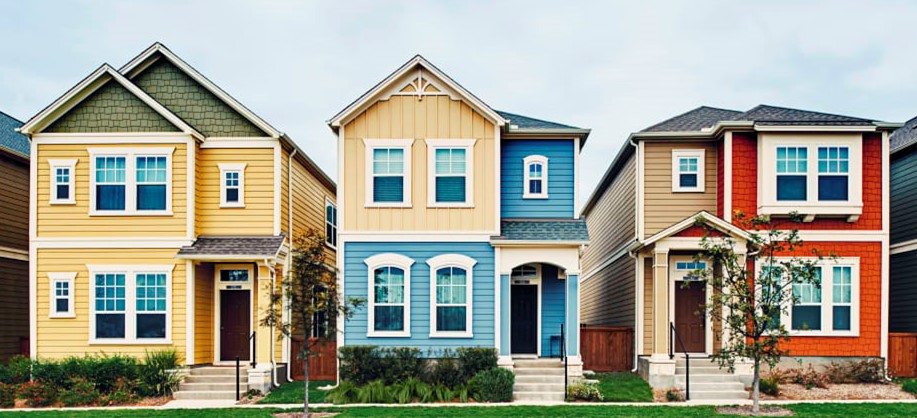
The latest example comes from Philadelphia, where Mayor Cherelle Parker has proposed a $10 million investment to help attract and support modular housing manufacturing within the city. On the surface, it’s exactly the kind of move many of us in offsite construction have been advocating for years. Instead of simply talking about housing shortages, Philadelphia is looking to increase the production capacity needed to build more homes.
That deserves attention.
The proposal is part of a broader housing initiative aimed at creating or preserving 30,000 housing units across the city. In addition to funding for modular manufacturing, the budget includes support for rental inspection programs and additional resources for the city’s land bank.
What’s different about this effort is that Philadelphia isn’t just trying to buy modular homes. It’s exploring the idea of creating a manufacturing hub inside the city itself.
Bringing Housing Production Home
One of the most intriguing aspects of the proposal is the possibility of establishing modular housing production on the long-vacant Logan Triangle site in North Philadelphia.
More than 30 acres could potentially become a center for housing manufacturing where homes are built indoors, protected from weather delays, labor disruptions, and many of the inefficiencies that plague traditional construction.
For anyone who has spent time inside a modern modular factory, the appeal is obvious.
Production lines can operate year-round. Quality control becomes easier to manage. Materials are protected from damage. Skilled labor can work in a safer and more predictable environment. Entire sections of homes can leave the factory with finishes, fixtures, electrical systems, plumbing systems, and cabinetry already installed.
In theory, this should allow Philadelphia to produce housing faster and more efficiently than relying exclusively on conventional site-built methods.
The city is not wrong in that assumption.
Proof That It Can Work
Philadelphia already has examples demonstrating the potential.
Volumetric Building Companies has completed several notable projects in the city, including SOLO on Chestnut and a large student housing development near Temple University. The company reported significant schedule reductions through modular construction, with some projects saving nearly a year of construction time.
Perhaps even more important is Veteran’s Village in the Frankford neighborhood.
The 47-unit development was completed in approximately 14 months and provided affordable housing for veterans experiencing homelessness and housing insecurity. According to the developer, the project was delivered at a fraction of the cost typically associated with comparable developments.
Those kinds of results naturally get the attention of city officials looking for solutions.
And they should.
The Factory Is Only One Piece of the Puzzle
But this is where my observation begins.
Over the past decade, I’ve watched communities across North America attempt to solve housing shortages by focusing on production. Build more factories. Increase capacity. Add automation. Improve efficiencies.
All worthwhile goals.
The problem is that housing isn’t simply a manufacturing challenge.
A factory can produce homes faster than ever, but those homes still have to navigate permitting processes, zoning regulations, financing requirements, utility connections, transportation logistics, site preparation, inspections, neighborhood approvals, and political realities.
In many markets, the factory becomes the most efficient part of the entire housing delivery system. Meanwhile, everything outside the factory continues moving at the same pace it always has.
That’s why I’ve often said that every efficiency gained inside the factory is often consumed by inefficiencies outside the factory.
Until cities address both sides of the equation, the full promise of offsite construction remains difficult to achieve.
What Philadelphia May Be Getting Right
What makes Philadelphia’s approach worth watching is that the city appears to be thinking beyond simply purchasing modular homes.
The proposal includes land bank support, housing policy initiatives, and efforts to create an ecosystem around housing production rather than treating modular construction as a standalone solution.
That’s a much more realistic approach.
Successful housing systems require alignment between manufacturing, land availability, infrastructure, financing, regulations, workforce development, and political support.
A factory alone cannot solve an affordable housing crisis. But a factory operating inside a coordinated housing strategy can become a powerful catalyst.
If Philadelphia succeeds, it won’t be because modular construction saved the day. It will be because city leaders figured out how to remove enough obstacles outside the factory to allow the efficiencies inside the factory to matter.
Modcoach Observation

I’ve lost count of how many cities have announced plans to attract modular factories over the years. Most of those announcements were accompanied by optimistic projections, ribbon cuttings, and promises of thousands of new homes. Some succeeded. Many struggled.
Philadelphia’s proposal feels different because it recognizes that housing is a system, not a product.
The factory may build the home, but the city builds the environment that enables housing. If Philadelphia can streamline the obstacles surrounding land, approvals, infrastructure, and financing while simultaneously investing in manufacturing capacity, it could become a model for other cities.
If not, the modular factory may simply become another example of a great solution waiting for the rest of the system to catch up.