





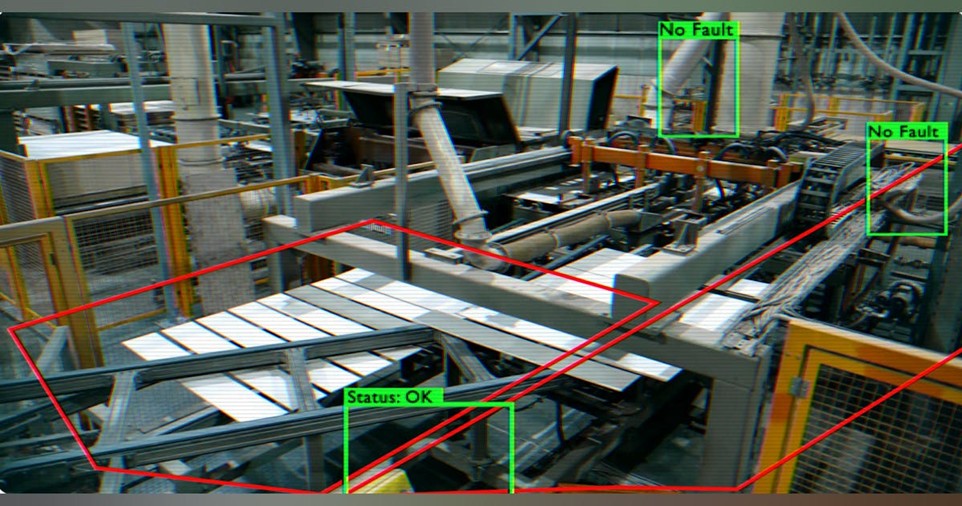
For all the talk about robots, fully automated factories, and lights-out manufacturing, the reality inside most modular factories is far less glamorous. The biggest problems aren’t futuristic. They’re painfully ordinary. Missed schedules. Surprise bottlenecks. Rework that nobody budgets for. Decisions made too late, with incomplete information, then justified afterward as “just part of the business.”
That’s where AI’s fastest and most meaningful wins in modular construction are happening—not on the shop floor with robots, but in the quiet, unglamorous work of production predictability and decision-making. AI isn’t fixing what might happen someday. It’s fixing what’s breaking factories today.
The Real Problem AI Is Solving Right Now
Most modular factories don’t struggle because they lack demand, vision, or technology. They struggle because they can’t consistently answer three simple questions with confidence:
What will we finish this week? What will slow us down next week? And what decision should we make today to avoid a problem two weeks from now?
In too many factories, those answers still come from tribal knowledge, experience, and educated guesses. That approach works—until volume increases, product lines expand, labor turns over, or one key person is out sick. Then the cracks appear.
AI steps in at that exact pressure point. Not to replace people, but to connect data that already exists and turn it into insight leaders can actually use.
Production Scheduling: From Hope to Probability
Production schedules in modular factories often look clean on paper and fragile in practice. A line is scheduled to produce a certain number of modules per day, assuming materials arrive on time, crews are fully staffed, designs are clean, and nothing unexpected happens. Everyone knows that assumption rarely holds.
This is where platforms like 4Ward Solutions naturally fit into the conversation. Their manufacturing execution systems are built specifically to bring structure and visibility to modular and offsite production environments—capturing real production data, tracking workflow across stations, and showing how plans compare to reality.
When AI is layered onto that kind of structured production data, scheduling stops being aspirational and starts becoming probabilistic. Managers can see which stations routinely fall behind, which tasks cause downstream delays, and which schedules look good only because problems haven’t surfaced yet. The immediate benefit isn’t perfection—it’s realism.
Factories don’t suddenly move faster. They move more honestly. And honesty alone improves on-time delivery.
Bottleneck Prediction: Seeing Trouble Before It Arrives
Every modular factory has bottlenecks. Most just don’t see them until they’ve already done damage.

Bottlenecks develop quietly. A slightly understaffed station. A recurring material delay. A design detail that takes just a few extra minutes per module. Individually, none of these trigger alarms. Collectively, they choke throughput.
This is where AI-enabled production systems shine. By analyzing workflow data across days and weeks, AI can identify patterns humans miss—stations that are slowly becoming constraints, crews stretched too thin, or design options that consistently disrupt flow. With platforms that already understand factory sequencing and dependencies, those insights become actionable instead of theoretical.
The value here isn’t replacing production managers. It’s giving them foresight instead of hindsight.
Decision-Making: Fewer Fire Drills, Better Choices
One of the most expensive habits in modular manufacturing is last-minute decision-making. Overtime approvals. Rush material orders. Design exceptions. All made under pressure to “keep things moving.”
AI changes the nature of those decisions by adding context. When leaders can see how similar situations played out in the past—how often overtime actually recovered schedule, or how frequently material substitutions created rework later—the conversation shifts. Decisions become informed instead of reactive.
Systems that integrate scheduling, production tracking, and historical performance data create a foundation where AI can support decision-making rather than override it. That’s where companies like 4Ward Solutions fit naturally: not as a replacement for experience, but as a framework that makes experience scalable.
The result is fewer fire drills, fewer broken promises, and far less chaos disguised as urgency.
Quality and Rework: Making the Invisible Visible
Rework is one of modular construction’s most quietly destructive forces. It rarely shows up cleanly on a balance sheet, but it shows up everywhere else—missed schedules, strained crews, frustrated builders, and eroding trust.
AI doesn’t magically improve quality, but it does something just as important: it exposes patterns. Which defects recur. Which crews struggle with specific details. Which designs generate repeat corrections. When quality data is tied directly to production flow, it stops being anecdotal and becomes measurable.
Once those patterns are visible, factories can respond with targeted training, design refinement, or process changes instead of blanket blame. Over time, rework stops being “the cost of doing business” and becomes a controllable variable.
Why This Matters Now More Than Robots
Robotics and automation will eventually play a larger role in modular construction. But automation amplifies whatever system it’s dropped into. If the system is disorganized, automation just helps mistakes happen faster.
AI applied to production predictability and decision-making does the opposite. It stabilizes the system first. It exposes weaknesses. It forces uncomfortable—but necessary—conversations about where time, money, and credibility are really being lost.
That’s why the most disciplined factories adopting AI today aren’t chasing flashy technology. They’re investing in platforms and processes that give them visibility, consistency, and control—then using AI to make those systems smarter.
My Thoughts
AI’s biggest immediate impact in modular construction isn’t speed, automation, or labor replacement. It’s clarity.
Clarity about schedules that don’t work as planned.
Clarity about bottlenecks forming beneath the surface.
Clarity about decisions that help—and those that quietly hurt.
When that clarity is built on structured production systems—like those used by forward-thinking factories working with 4Ward Solutions—it becomes actionable. And in an industry built on promises about speed, cost, and certainty, predictability is still the most valuable innovation of all.
.
With more than 10,000 published articles on modular and offsite construction, Gary Fleisher remains one of the most trusted voices in the industry.
.
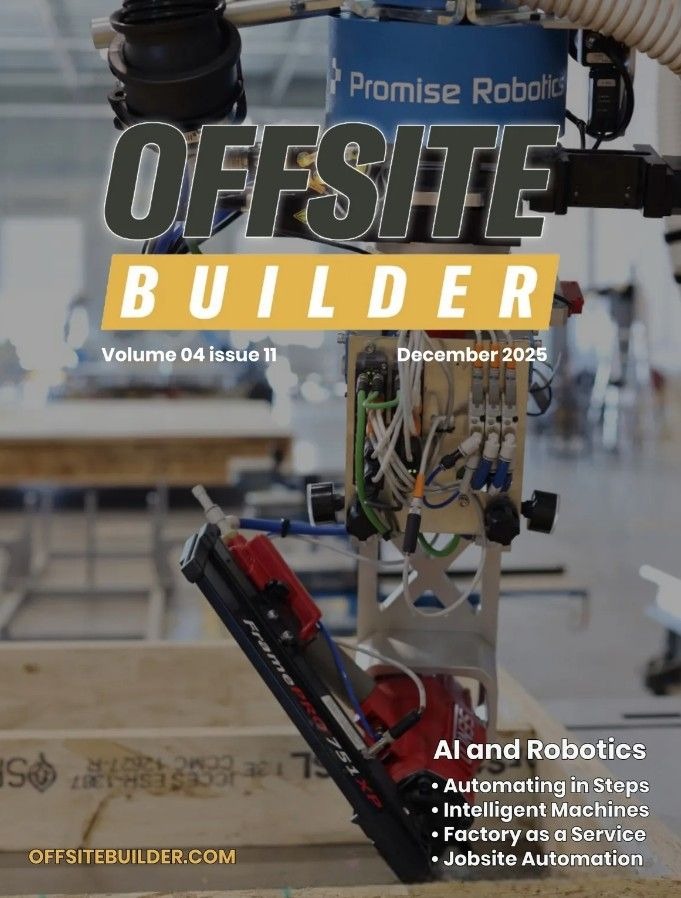
CLICK HERE to read the latest edition

Contact Gary Fleisher