British experience meets American opportunity in a promising factory partnership.
There is something encouraging about a modular construction announcement that begins with an operating factory. You have people building homes, a production floor to improve, and customers whose expectations will quickly tell you whether your business plan makes sense. That gives a new partnership something useful to work with from day one.
That is what caught my attention about British industrialized-construction group Reds10 acquiring a majority interest in MMY US. Announced October 26, the deal gives Reds10 an American manufacturing foothold in Louisville, Kentucky, while bringing MMY additional capital, technology, and operating support. Financial terms were not disclosed.
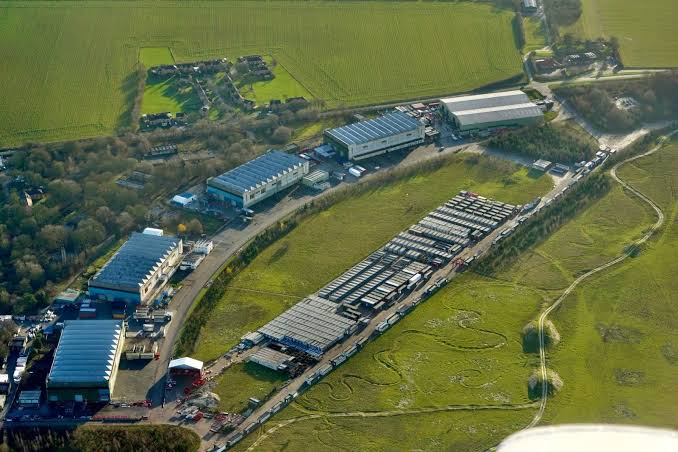
Reds 10 Factory
For an industry that spends plenty of time discussing how to scale, this is an opportunity to show what scaling with an experienced partner can accomplish.
Start Where the Work Is Already Happening
Entering another country’s construction market takes considerably more than shipping over a factory layout and changing the electrical plugs. Building requirements, purchasing habits, subcontractor relationships, and customer expectations all remind newcomers that local knowledge matters.
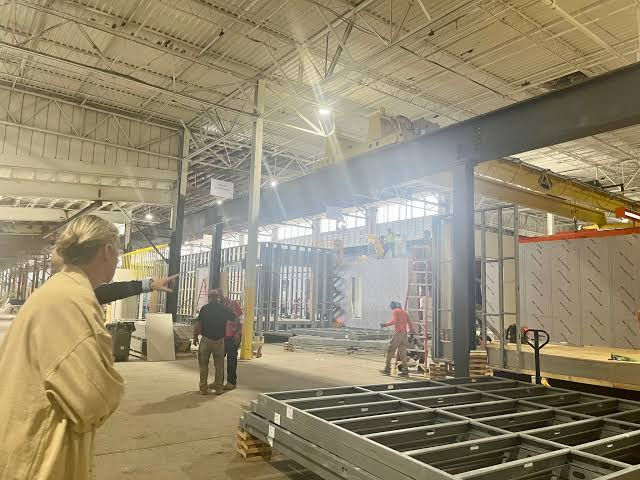
MMY US Factory
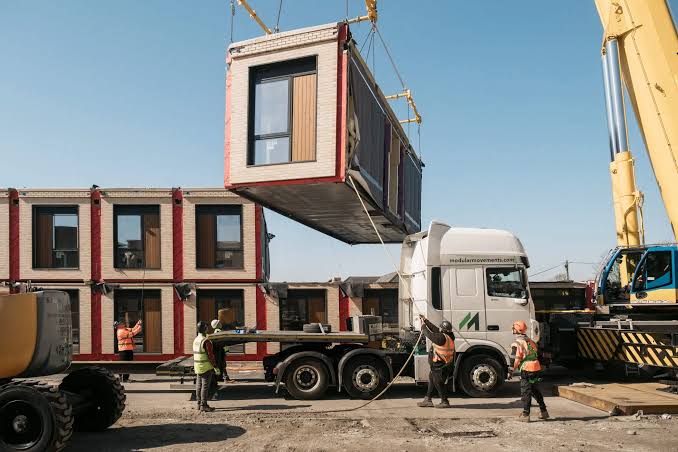
An acquisition like this offers a practical starting point. Reds10 can learn from an existing American operation while contributing its own manufacturing experience. MMY, in turn, has an opportunity to improve its systems without discovering every answer through expensive trial and error.
The real value could show up in everyday factory work: better coordination between engineering and production, more dependable material deliveries, clearer instructions at each station and fewer surprises when modules reach the jobsite. Those improvements rarely make a spectacular announcement, but factory managers know what they are worth.
Cleveland Gives the Partnership Room to Grow
MMY also plans to redevelop Cleveland’s historic Wellman-Seaver-Morgan building into a manufacturing center. The company expects that factory to come online in 2028, making it a future expansion rather than capacity available today. Reds10 says the enlarged group encompasses 14 companies, more than 1,000 employees, and approximately 640,000 square feet of manufacturing space.
An appealing connection exists between an old industrial building and a new approach to housing production. A place associated with making things could get another opportunity to do exactly that, this time helping create homes.
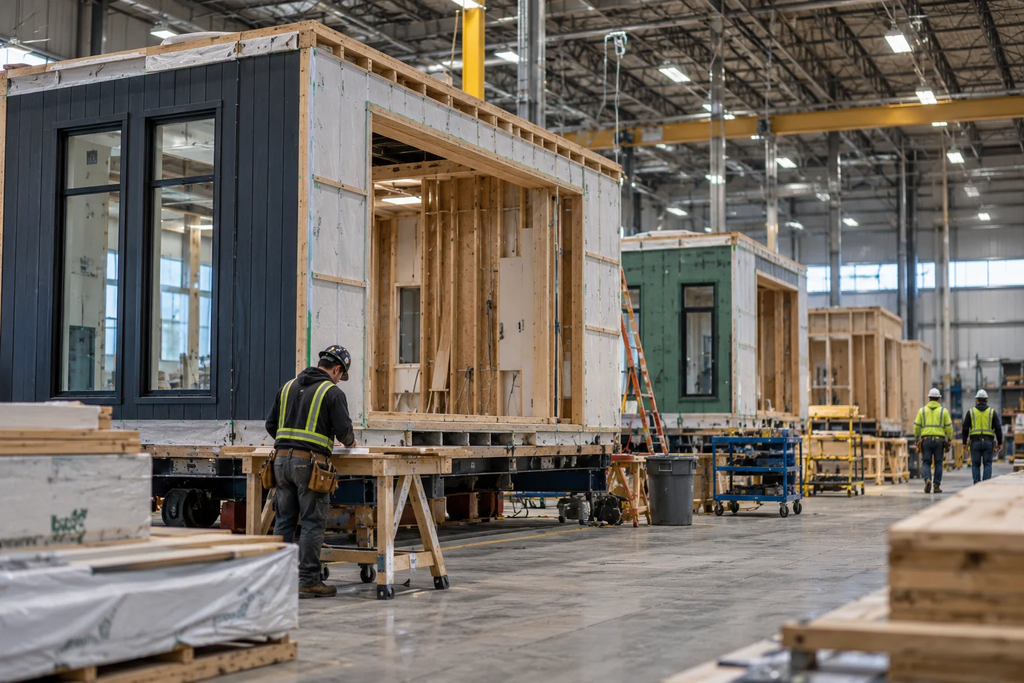
MMY US Production Line
The development period also provides a useful runway. Louisville can become the place where the partners test improvements, strengthen training, and establish which processes deserve to be repeated in Cleveland. A second factory becomes much more valuable when the first can help teach it how to operate.
Ambition with Some Homework Attached
The company reports an approximately $100 million order book and forecasts revenue rising from $17.4 million in 2026 to $52.8 million in 2027 and $214 million by 2030. Those figures are company representations and projections, not independently verified results.
That is an ambitious growth path, and ambition belongs in this business. The important part is connecting it to projects that can actually move through production.
A factory needs customers with financing, approved plans, prepared sites and decisions made on time. Turning a promising pipeline into a dependable production schedule takes coordination well beyond the factory walls. This partnership has an opportunity to build that discipline alongside its manufacturing capacity.
The same practical thinking applies to transferring British expertise. Some methods may fit immediately. Others will need adjustment for American requirements and working practices. The strongest approach will be to let both teams contribute, measure what improves performance, and build from there.
Gary’s Observation

I like seeing experienced manufacturing companies put money and effort into an existing modular operation. It suggests there is value in the people, relationships and production knowledge already in place.
What interests me most here is the opportunity to combine resources with local experience. A factory team that understands its market, supported by a group with broader technical and operating capabilities, has something worth developing.
Reds10 and MMY still have plenty of work ahead. But an operating base in Louisville, a planned next step in Cleveland, and a partner willing to invest make this a story worth following. I’ll be watching for the milestones that matter most: homes completed, employees developing their skills, and customers coming back for another project.