





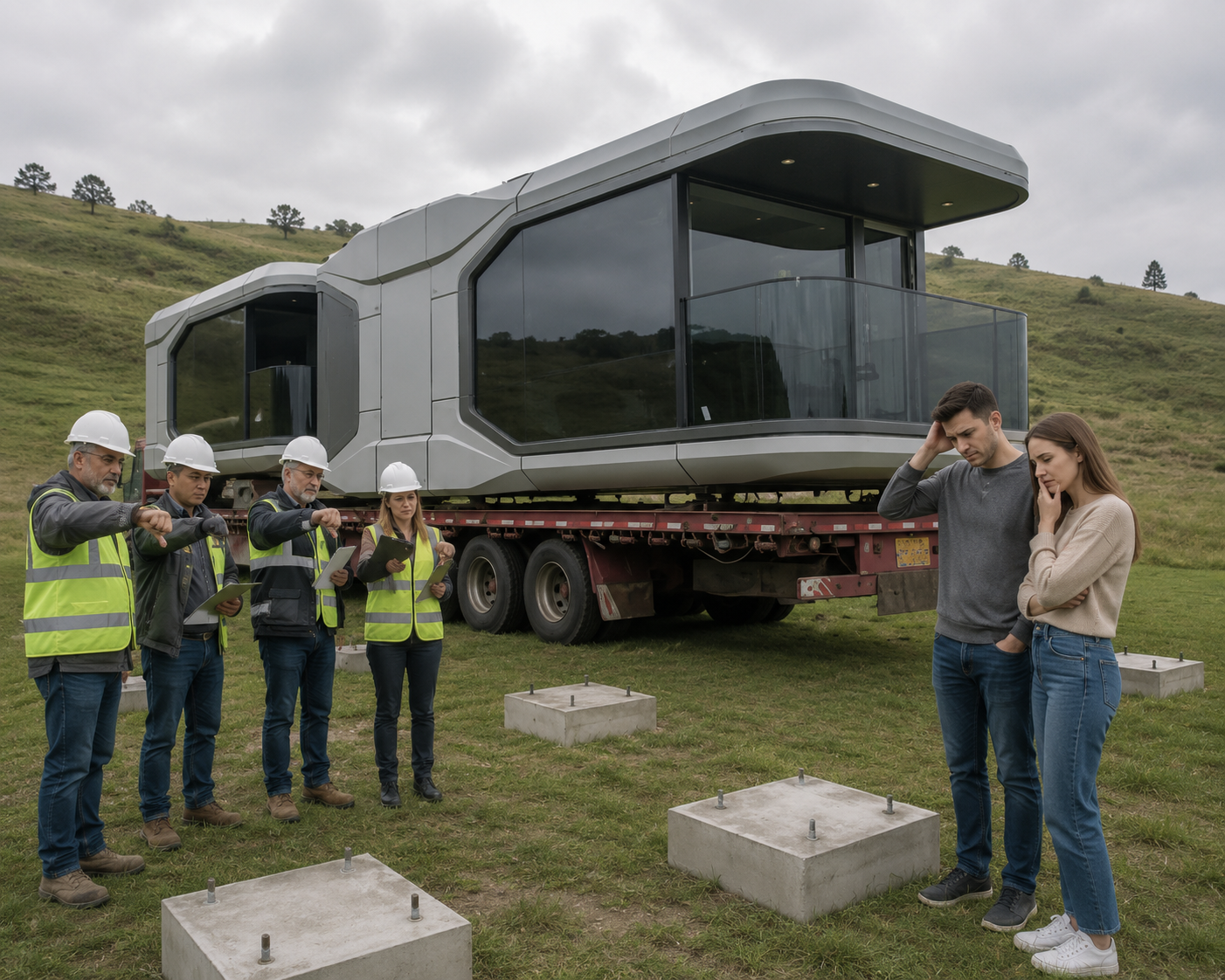
Scroll through social media long enough, and you’ll eventually see one of them. A compact little house unfolds from something resembling a shipping container, complete with windows, doors, a bathroom, kitchen cabinets and enough room for one or two bedrooms. The video moves quickly, the music is upbeat, and a price between $25,000 and $37,000 appears on the screen.
At that price, it is hard not to stop scrolling.
Chinese factories are producing an ever-growing assortment of expandable houses, folding houses, container-style homes and kits that can be loaded into shipping containers and sent to buyers throughout the world. Some arrive largely complete, while others come in panels and pieces that must be assembled after delivery.
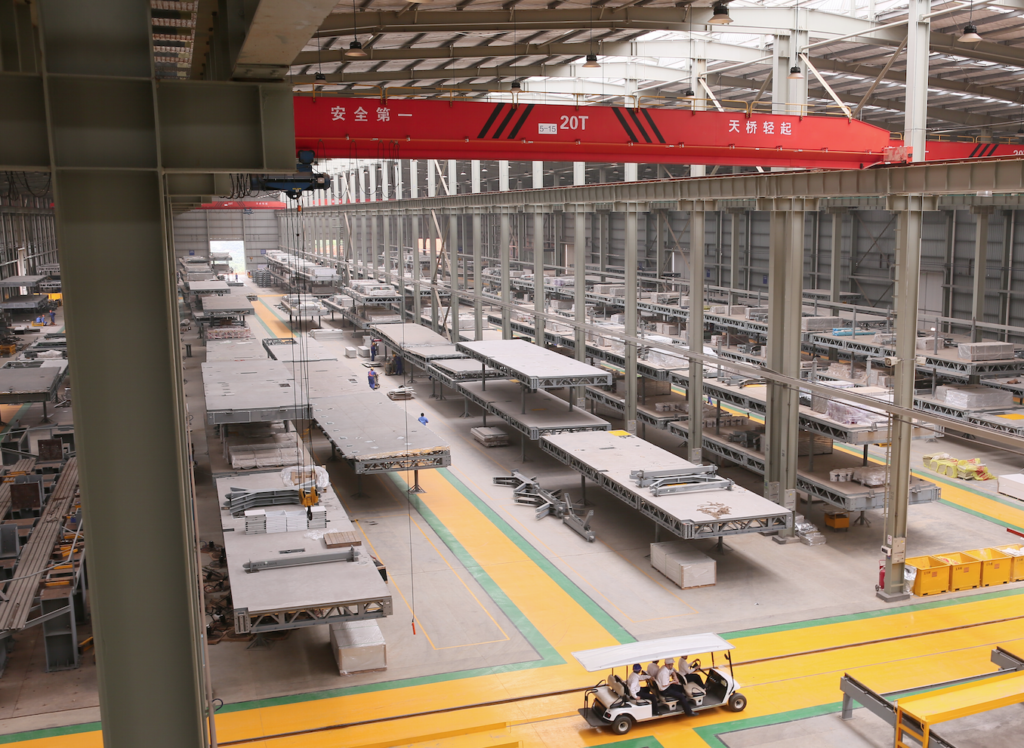
The problem isn’t necessarily whether the Chinese factory can produce the building shown in the video. The real question is whether that building can legally and successfully become someone’s home in the United States.
That is where the inexpensive little house can begin accumulating some very expensive problems.
The Price Is Only the Beginning
The price shown in the advertisement is usually the factory price in China. It may not include transportation to the Chinese port, loading, ocean freight, insurance, tariffs, customs fees, port charges or delivery from an American port to the buyer’s property.
Once the house arrives in the United States, someone must unload it. Depending on its size and design, that could require a crane, a forklift, a specialized trailer, or all three. If the property is located far from a major port, domestic transportation alone could become a significant expense.
Buyers also need to know exactly what arrives for the advertised price. The attractive model shown in the video may include upgraded finishes, appliances, electrical equipment, plumbing fixtures and furnishings that are not included in the base package. The $25,000 house may turn out to be a mostly empty shell wearing the same exterior as the more expensive demonstration model.
Customs May Want Its Share
Imported prefabricated buildings are subject to customs classification, duties, and potentially additional tariffs applied to products originating in China. The buyer may also need a customs broker to complete the required paperwork and arrange for the shipment to clear the port.
Customs officials do not care that the building was inexpensive or that the buyer intends to use it as a home. If the paperwork is incomplete, the classification is incorrect or the shipment contains materials that require additional documentation, the house can remain at the port while storage and handling charges continue to accumulate.
Suddenly, the buyer owns a house but cannot get it out of the shipping yard.
A House Is Not Legal Simply Because It Arrived
One of the biggest misunderstandings surrounding these homes is the belief that ownership automatically creates permission to place and occupy one. It does not.
Before ordering anything, the buyer needs to contact the local zoning and building departments. Zoning officials will determine whether another dwelling is allowed on the property, where it can be located, how far it must be from property lines, and whether its extremely small size is permitted.
The building department will want substantially more information. It may require engineered drawings showing that the structure meets local wind, snow, seismic and soil conditions. It may also want details on insulation, fire safety, ventilation, emergency escape openings, ceiling heights, plumbing, electrical work, foundations, and energy code compliance.

A glossy brochure stating that the building meets “international standards” will probably not be enough.
ISO and CE Are Not Building Permits
Chinese manufacturers frequently advertise ISO certification, CE markings or other international approvals. Those credentials may be legitimate and valuable within the markets for which they were intended, but they do not automatically establish compliance with American residential building codes.
A local building official may require engineering documents to be sealed by a professional licensed in that state. The official may also require evidence that electrical equipment, wiring, plumbing components, windows, doors, insulation, and mechanical systems comply with recognized American standards.
If the manufacturer cannot provide the necessary technical documents, the burden falls on the buyer. Hiring American engineers to analyze an unfamiliar imported structure can cost thousands of dollars, and even then, approval is not guaranteed.
The Inspection May Have Happened Too Late
Factory-built homes are normally inspected during construction because much of the structural, electrical, and plumbing work becomes hidden when the walls and ceilings are closed. An inspector cannot verify concealed wiring, structural connections, insulation or plumbing simply by walking through the finished building.
If an imported house was constructed without inspections recognized by the state or local authority, the building official may require sections of the walls, floors and ceilings to be opened. In some cases, the authority may refuse to accept the completed unit because there is no reliable way to verify what is concealed inside it.
This is the nightmare scenario: the house has been purchased, shipped across the Pacific, cleared through customs and delivered to the property, only for the building department to say it cannot be occupied.
The Foundation Still Has to Be Engineered
Even an inexpensive house needs an approved foundation. A few concrete blocks placed on the ground are unlikely to satisfy the requirements for frost depth, soil bearing capacity, drainage, anchoring, or resistance to wind uplift.
Expandable houses create additional questions because their weight and structural loads change as the sections unfold. The foundation must properly support the central frame and every expanded section. Doors and windows may bind, floors may become uneven, and roof joints may leak if the supports settle differently.
The manufacturer’s standard foundation diagram may not account for Maryland frost conditions, Florida hurricanes, northern snow loads or western seismic requirements. Local engineering may still be necessary.
Utilities Can Cost More Than the House
The presence of a sink, toilet, and breaker panel does not mean the house is ready to be occupied. Water, sewer or septic, electricity and possibly gas must still reach the building.
Trenching across a property, upgrading an electrical service, installing a sewer connection, or adding a septic system can quickly exceed the unit’s purchase price. Local contractors may also discover that the imported plumbing and electrical connections are unfamiliar or incompatible with commonly available American components.
A bargain house located 150 feet from the nearest utility connection is still 150 feet away from becoming a home.
American Weather Can Reveal Hidden Weaknesses
Many inexpensive expandable houses rely on lightweight steel frames and insulated sandwich panels. Those materials can perform adequately when properly designed and assembled, but the details matter.
Metal readily transfers heat and cold, creating the possibility of condensation inside walls and around framing members. Folding joints, roof seams, and expandable sections create additional opportunities for air and water leakage. Insulation that appears adequate in a mild climate may not satisfy the energy code—or the occupants—in areas with very cold winters or hot, humid summers.
Windows and doors can also become weak points. A product that looks perfectly good in a factory video may leak air, admit water or fail under the wind pressures found in parts of the United States.
Repairs and Warranties Could Become Long-Distance Problems
What happens when a window breaks, a folding hinge fails or a specialized plumbing fixture begins leaking? The local building-supply store may not carry replacement parts, and an American contractor may have never seen the system before.
The manufacturer may provide a warranty, but enforcing that warranty from several thousand miles away is another matter. Shipping a replacement component from China could take weeks, and the homeowner may still be responsible for finding someone willing to install it.
There is no local service department arriving tomorrow morning with parts on the truck. The buyer may become the general contractor, service coordinator and product engineer for the life of the building.
Financing and Insurance Are Not Guaranteed
Lenders and insurance companies want to understand what they are financing and insuring. An unfamiliar imported house without recognized certification, conventional appraisal data or a clear permanent-foundation classification may create problems.
The buyer may have to pay cash for the unit, site work, and installation. Even after completion, an insurer may want documentation proving that the structure complies with applicable codes and has passed all required inspections.
Without permits and a certificate of occupancy, obtaining financing or insurance could become extremely difficult. Selling the property later could be even harder.
The Bargain May Still Be Sitting in the Yard
None of this means every Chinese-built compact house is defective or unusable. China has enormous manufacturing capabilities and can produce excellent products when given the correct specifications, engineering, inspections, and quality controls.
The danger is assuming that a building designed for worldwide online sales is automatically ready to become a legal American residence. The factory may have delivered exactly what was ordered. Unfortunately, what was ordered may not be what the building department, zoning officer, insurance company, lender or homeowner actually needs.
Before sending a deposit, the buyer should have the complete plans reviewed by the local building department, obtain written confirmation of the required inspection and certification process, verify every included component and calculate the entire cost through occupancy. If the seller cannot provide detailed structural, mechanical, electrical, plumbing, and energy documentation before the sale, that alone should be reason enough to step away.
Gary’s Observation

The most dangerous part of the $25,000 Chinese house isn’t necessarily the house. It’s the belief that buying one is the same as owning a finished home.
The advertisement sells a building at the factory door. It does not show the buyer standing at an American port dealing with customs, calling an engineer, searching for replacement components, or explaining to a building official why the wiring and plumbing disappeared behind the walls before anyone approved them.
That little house may cross an ocean in a shipping container. Whether it can make the final journey from the container to a legal certificate of occupancy is an entirely different question.