





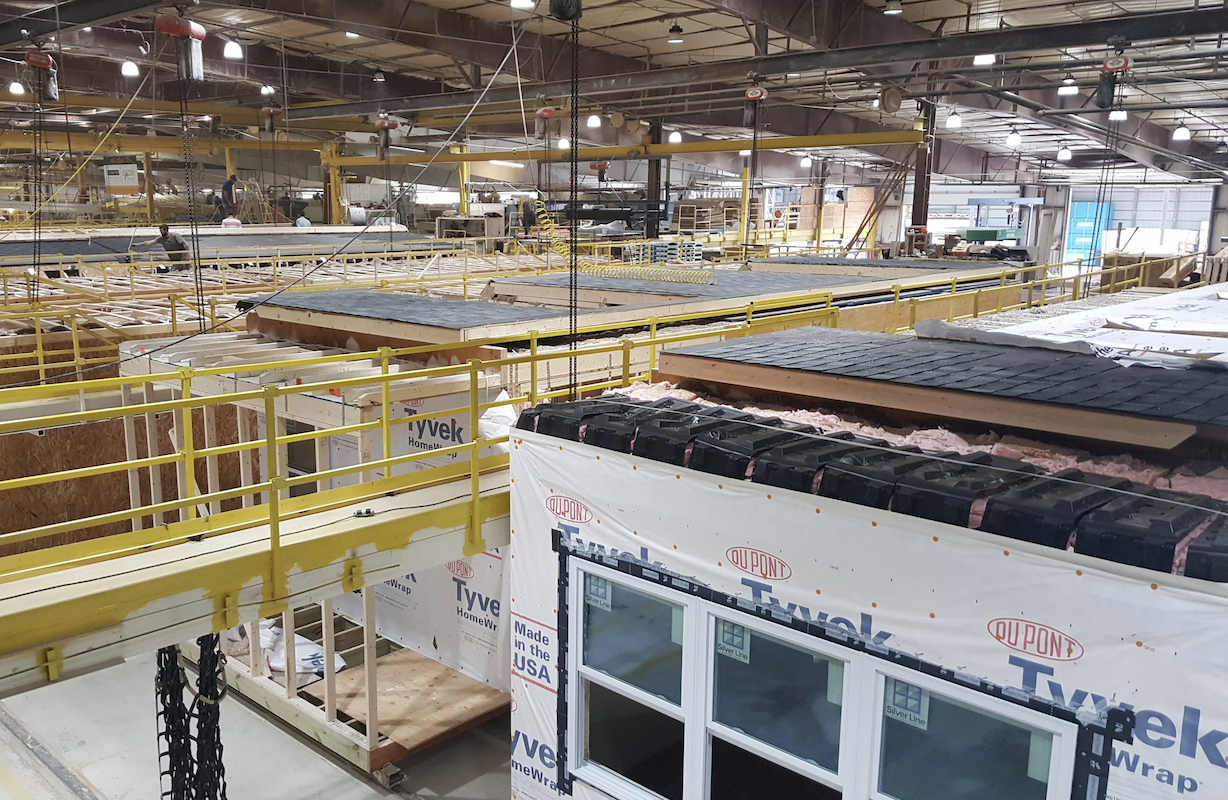
A modular factory can build apartments, hotels, and custom homes. The harder question is whether it can serve all those customers without letting one group down.
Imagine walking into the sales meeting with the news every factory owner wants to hear. You landed the big one. Enough modules to keep the line busy for months, give purchasing some negotiating room, and make the production calendar look better than it has in a long time.
There would probably be congratulations all around. There should also be a question from somebody sitting at that table: “What happens to the customers already on our schedule?”
That question can take some of the shine off the announcement. It can also keep the company from making an expensive mistake.
We talk about modular construction as though every factory belongs to the same business, serves the same customers, and has the same operating needs. Apartments, hotels, townhouses, and a retired couple’s custom ranch home all go into the same industry bucket. They leave a factory on trucks, so apparently they should fit together nicely on a production schedule.
Anybody responsible for making that schedule work knows better.
What Is Your Customer Actually Buying?
A developer ordering modules for an apartment project is buying part of a coordinated building program. The factory’s work has to fit financing, approvals, foundations, transportation, crane availability, and field completion. A change in one part of that program can affect everything that follows.
The developer wants to know whether the factory can deliver the specified product in the required sequence at a cost the project can support. There may be several unit types and plenty of engineering involved, but once those decisions are settled, repetition becomes valuable.
A family buying a home through a local builder approaches the purchase differently. They want a pantry large enough to use, an office with a door, and a bathroom that will still work for them ten years from now. They may understand factory construction perfectly well. That doesn’t mean they want to live in somebody else’s preferred floor plan.
Both customers care about quality, price, and delivery. But the promises that win their business are different, and those promises follow the order straight into engineering and onto the production floor.
This isn’t neatly divided by geography, either. A rural rental development can offer plenty of repetition. A house on a suburban lot can require considerable customization. The useful distinction is how the customer buys and what the factory must do to fulfill the order.
Repetition Pays When the Work Is Ready
There is a lot to like about building similar modules repeatedly. Crews become familiar with the work. Purchasing can plan around common materials. Engineering effort can be spread across multiple units, and recurring details give quality control something consistent to monitor.
But those advantages depend on decisions being made and the project moving when it is supposed to move.

A signed contract doesn’t finish the drawings. It doesn’t secure every approval or make a foundation ready. It certainly doesn’t create yard space when completed modules have nowhere to go.
An owner looking at several months of contracted production should also be asking how much of that work is actually released, what could hold it up, and what the factory will build if the start date moves. Those answers belong beside the backlog number.
Otherwise, the factory can find itself with a full order book, an uncertain production schedule, and suppliers expecting payment. That is a difficult combination to explain at the next management meeting.
Flexibility Has to Earn Its Keep
The custom-home factory faces a different challenge. Its customers expect choices, and a good builder network helps turn those choices into repeat business.
There is nothing inherently wrong with customization. The trouble begins when the company sells flexibility without building a reliable way to manage it.
Consider two requests. One buyer selects an approved larger kitchen island before drawings are released. Another asks to move a bathroom after engineering and purchasing have finished their work. Both may be described as “just a little change.” They create very different demands on the factory.
The price of a change needs to cover more than the difference in materials. Someone has to review it, draw it, price it, communicate it, and make sure the right people build it. If the change interrupts another department or requires work to be redone, that effort has a cost, too.
Approved options, clear pricing, and firm decision deadlines make customization manageable. They also give the builder something useful to explain to the buyer. “Here are your choices, and here is when we need them” is a much better conversation than calling a customer after the fact to explain why a promise cannot be kept.
When Your Best Builders Become an Inconvenience
Now return to that big commercial order.
Suppose the factory has spent years developing relationships with builders who order a few homes at a time. Those builders know the product, understand local requirements, and bring the factory its next customers. Individually, their orders may look small. Together, they support the business.
Then the large project arrives. Engineering gets reassigned. Purchasing works on the biggest immediate requirements. Production slots for individual homes start moving, and the sales staff begins making uncomfortable phone calls.
“We need you to work with us on this one.”
A dependable builder may do exactly that. But patience gets harder when a family has arranged financing, sold its existing house, or planned a move around the delivery date the builder was given. Every delay puts that builder’s reputation on the line.
Eventually, some builders call another factory. They may discover a supplier willing to give their orders the attention they used to receive from you.
The commercial project finishes. Management starts looking for the next one, only to discover that the regular residential orders are thinner than expected. The factory was so busy serving its newest customer that it helped its established customers develop new relationships elsewhere.
That loss may not appear in the commercial job’s profit calculation. It can still affect the company long after the last module ships.
Two Markets Need an Operating Plan
I don’t believe serving both markets is automatically a mistake. I do believe it requires more than confidence that the production manager will figure it out.
Management needs to decide how much capacity each customer group can depend on. That includes engineering capacity, purchasing attention, storage space, and available cash. An open station on the line doesn’t help much when the drawings aren’t ready or the yard is full.
Some factories may be able to reserve residential production slots and schedule larger projects in defined blocks. Others may need separate teams, lines, or facilities. Each approach has a cost that the expected business must justify.
The rules also need to hold up when a tempting order arrives. If every large contract overrides the capacity reserved for regular builders, the reservation means very little.
Before accepting the work, somebody should be able to explain what happens if the project starts late, how completed modules will be handled if the site falls behind, and which existing commitments must still be met. Payment timing and working-capital needs deserve the same attention as the selling price.
Sometimes that review produces an uncomfortable answer: the factory can build the project, but it cannot responsibly promise the requested dates. Finding that out before signing is considerably cheaper than discovering it halfway through production.
Gary’s Observation

I think our industry spends too much time showing everything a modular factory can build and too little time deciding which work makes sense for a particular business.
Technical capability is only the beginning. A factory also needs customers it can serve profitably, promises it can keep, and an operation organized to do both consistently.
There is a good business in repeatable building programs. There is also a good business in helping local builders deliver homes with carefully controlled choices. A company can pursue both, but the owner has to understand what each requires before the sales department commits the same resources twice.
The next time a big order comes through the door, celebrate it. Then take a hard look at the customers already waiting for their homes. They helped keep your factory running before that developer called.
You may need them again after the developer’s last truck leaves.