





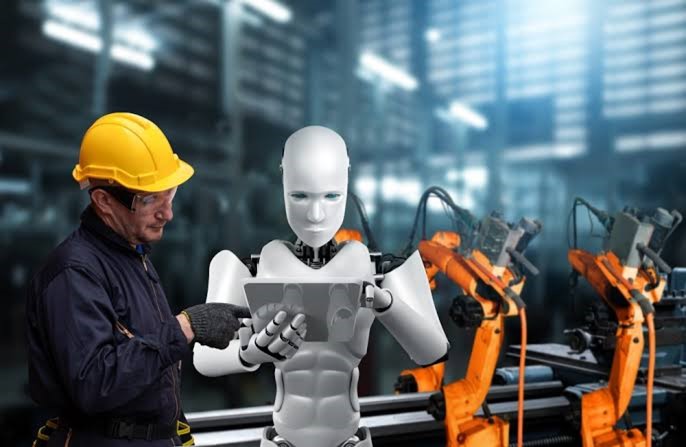
Artificial intelligence is taking a bold step forward. Enter AI agents: sophisticated tools capable of project management, email sorting, inventory monitoring, and much more. These agents, exemplified by Microsoft’s latest offerings, are not just tools for individuals—they are reshaping the core workflows of businesses across industries. By 2025, the mantra “AI doing things with you or for you” will underpin corporate operations worldwide, signaling a new era of collaborative efficiency.

.
Unlike static automation systems, AI agents represent a dynamic evolution. They learn, adapt, and proactively assist, integrating seamlessly into workflows. Microsoft, Google, and other tech giants have invested heavily in creating AI solutions that do more than respond to commands—they anticipate needs. From scheduling meetings and summarizing emails to predicting supply chain bottlenecks, these agents act as virtual team members, ready to shoulder tedious or complex tasks. The distinction is critical. Traditional AI applications have been focused on narrow, predefined functions. AI agents, however, are designed to collaborate. They learn from users’ behaviors, adapt to changing business needs, and interact with other systems to provide actionable insights. As a result, businesses are not just automating—they are augmenting human capabilities.
The widespread adoption of AI agents stems from their ability to transform workflows. They reduce manual workloads, allowing employees to focus on strategic and creative tasks. In project management, for example, AI agents can track milestones, assign tasks based on team capacity, and flag potential delays. By analyzing patterns in emails, inventory systems, and project timelines, they provide real-time recommendations that drive smarter decisions. Imagine a system that predicts supply chain issues weeks in advance or identifies recurring customer complaints hidden in email threads. These tools are no longer confined to large enterprises. Cloud-based solutions and integrations with popular platforms like Microsoft 365 have democratized access to AI agents, making them affordable and scalable for businesses of all sizes.


.
The real-world impact of AI agents is already being felt across sectors. In project management, they transform how teams approach their work, ensuring managers can focus on high-level strategy rather than administrative minutiae. When it comes to email sorting, AI agents take inbox management to a new level, analyzing content, flagging urgent issues, and even drafting responses. This efficiency is a game-changer for customer service teams, leading to faster response times and higher satisfaction. For industries with complex supply chains, AI agents predict inventory needs, automate reordering, and identify inefficiencies. A simple suggestion to use alternative suppliers based on cost or proximity can significantly reduce delays and expenses. Even in human resources, AI agents are streamlining onboarding by providing personalized training plans and ensuring compliance with company policies, making the integration process for new hires smoother and faster.
Despite their potential, AI agents are not without challenges. The more integrated they become, the more data they access, which raises concerns about privacy and security. Companies must implement robust safeguards and comply with regulations to protect sensitive information. Another challenge lies in bias. AI systems, trained on flawed or incomplete data, can perpetuate systemic issues, making transparency and fairness essential. There are also concerns about employee anxiety. The rise of AI agents can make workers fear replacement, so clear communication about how AI enhances rather than replaces human roles is critical. Finally, integration complexity poses a hurdle. For AI agents to deliver value, they must integrate with existing systems. This requires investments in modernization and compatibility, which can be a significant undertaking for businesses.
Preparing for the AI agent revolution starts with identifying repetitive, time-consuming tasks that AI agents could streamline. Employees should be equipped with the skills needed to collaborate with these tools effectively. Businesses can begin with pilot projects to test their effectiveness and refine deployment strategies. Partnering with experts can ensure seamless implementation and ongoing support. As these tools become more sophisticated, their role in the workplace will continue to evolve. By 2030, they are expected to act as cross-departmental liaisons, play a critical role in predictive analytics, and enable hyper-personalization in customer interactions.
The integration of AI agents into corporate workflows is not just a technological shift; it’s a cultural transformation. By automating mundane tasks, providing actionable insights, and fostering collaboration, these agents are redefining what’s possible in the workplace. Whether you’re managing projects, sorting emails, or monitoring inventory, AI agents are poised to become indispensable allies in the quest for operational excellence. The question is no longer whether AI agents will be part of your workflow but how quickly you can adapt to harness their potential.
Gary Fleisher, The Modcoach, writes about the modular and offsite construction industry at Modular Home Source.
.

CLICK HERE to read the latest edition

Contact Gary Fleisher