






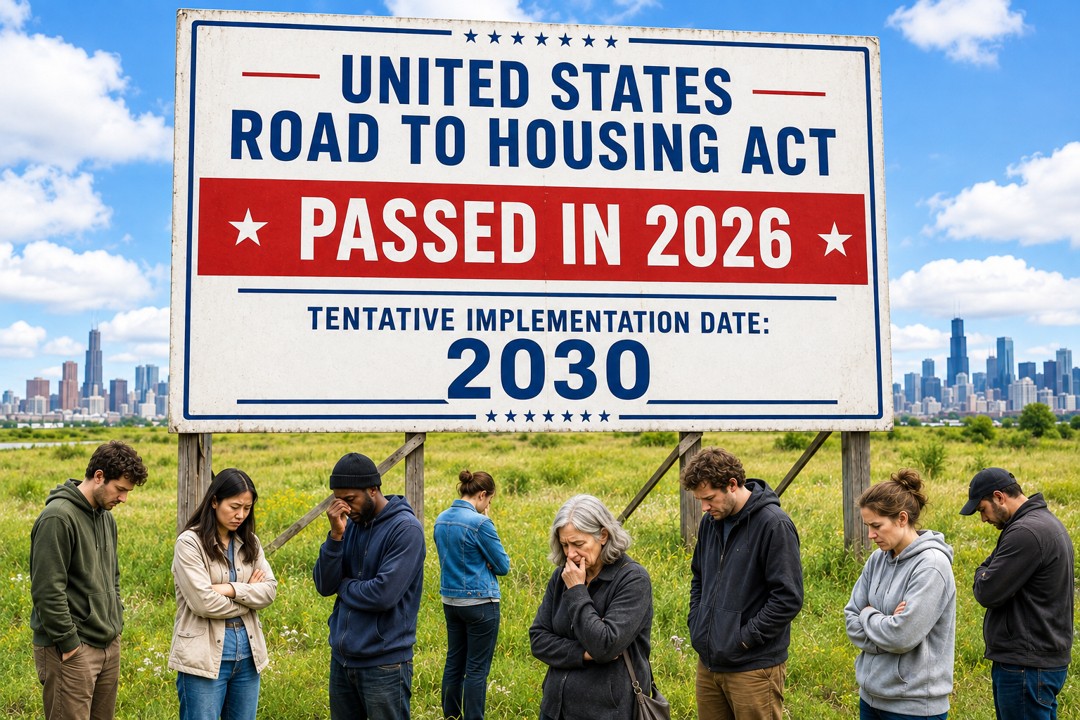
Congress passed the 21st Century ROAD to Housing Act with bipartisan margins we rarely see in Washington. The Senate approved it 85–5, the House followed 358–32, and on July 11, 2026, it became Public Law 119-101 without the president’s signature. After years of discussion about the housing shortage, regulatory barriers, manufactured housing, modular construction, financing, zoning, and local resistance, the federal government finally produced a comprehensive housing package.

That was the easy part.
Over the next 12 to 24 months, I believe we will hear a lot about studies, agency reviews, proposed regulations, public-comment periods, pilot programs, implementation guidance, and funding requests. What we probably will not see is a sudden surge of affordable homes moving down factory production lines. The ROAD to Housing Act may eventually create meaningful opportunities for offsite construction, but passing a law and producing a home are two very different accomplishments.
The First Year Will Be Dominated by Paperwork
The Act contains 12 titles and 60 sections touching almost every corner of federal housing policy. It assigns responsibilities to HUD, FHA, USDA, the CFPB, FHFA, the Department of Veterans Affairs, banking regulators, the Government Accountability Office, and several other agencies. Each one must determine what the law requires, how its existing regulations must change, which departments are responsible, and how those changes will be communicated to lenders, developers, builders, state agencies, and local governments.
The Bipartisan Policy Center’s implementation tracker says HUD must carry out dozens of directives, many with tight deadlines and limited staff capacity. It also warns that full implementation could take years. That is not political criticism. It is a realistic description of how federal policy moves from legislative language to something a builder can actually use.
Some provisions took effect when the law was enacted, but even a self-executing provision may be of limited practical value until the responsible agency updates its handbooks, forms, underwriting requirements, field instructions, and compliance procedures. Lenders and developers are not likely to risk millions of dollars based solely on their interpretation of a new statute. They will wait for HUD, FHA, USDA, or another agency to tell them exactly how the provision will be administered.
We are already seeing that caution. On August 12, FHA updated its Single Family Housing Policy Handbook but specifically stated that the update did not include ROAD to Housing Act provisions because they remain under evaluation. That does not mean FHA is resisting the law. It means the agency is still working through what the changes mean and how to incorporate them into everyday operations.
Congress Authorized Programs Without Funding Most of Them
One of the largest roadblocks is money. The ROAD to Housing Act is primarily a policy and authorization package, not a large housing appropriation. Congress created or expanded more than a dozen grant programs, pilots, studies, and demonstrations, but nearly all will depend on future appropriations to operate.
That distinction is important. Authorization gives a federal agency permission to establish a program. Appropriation gives it the money to do so. Washington often celebrates the first step without guaranteeing the second.
The National League of Cities says the earliest possible funding for many new programs would come through the fiscal year 2027 appropriations process. It also acknowledges that congressional appropriators could fund all, some, or none of them. Local governments are already being encouraged to lobby Congress for “program-enabling” funding because the law itself does not ensure that the promised resources will be available. The NLC’s implementation FAQ makes that challenge quite clear.
Over the next year, housing advocates, cities, developers, and industry associations will compete for attention during a difficult federal budget process. If Congress provides limited funding, federal agencies will have to decide which programs receive priority. If funding is delayed, some of the Act’s most promising ideas could remain little more than authorized programs described on government websites.
For factory owners, this means a grant program mentioned in the Act should not be treated as a source of future orders until the money has been appropriated, the program has been created, applications have been accepted, awards have been made, and actual projects have survived local approval and financing. That chain can easily consume two or three years.
Manufactured Housing Has Opportunity, but Also a Long Transition
The Act eliminates the permanent-chassis requirement from the federal definition of a manufactured home. On paper, that could become one of the most important housing-production changes in decades. It could encourage new designs, reduce some of the stigma associated with manufactured housing, and allow HUD Code producers to compete in markets that previously viewed a permanent steel chassis as a defining limitation.
However, the statutory change does not mean factories can immediately begin building chassis-free HUD Code homes. HUD must revise its construction and safety standards through formal rulemaking. The agency must decide how homes without permanent chassis will be designed, transported, installed, inspected, labeled, and treated under the federal regulatory system.

States must also certify that they will provide parity for homes constructed without permanent chassis. Most states have until July 11, 2027, while states with biennial legislatures may have until July 11, 2028. Federal agencies must then coordinate their treatment of these homes across financing and housing programs.
Even after the rules are published, factories will need engineered designs, updated production procedures, new quality-control manuals, revised approvals through their DAPIAs, employee training, transportation plans, installation instructions, dealer education, and lender acceptance. Local building and zoning officials will also need to understand that these homes remain manufactured housing under federal law even though they no longer resemble the traditional product in one very visible way.
That is why I believe it could be several years before chassis-free manufactured homes appear in meaningful numbers. The law opened the door, but the industry must still design the product, approve it, finance it, explain it, sell it, transport it, install it, and convince local officials to permit it.
Modular Housing Received a Review, Not a Guaranteed Solution
The Modular Housing Production Act directs HUD to review FHA construction-financing programs and identify barriers confronting modular housing developers. That review is due by July 11, 2027, and HUD must begin related rulemaking within 120 days after publishing it.

This is encouraging, but we need to understand what it means. Congress did not immediately remove every financing barrier faced by modular developers. It ordered HUD to study those barriers and determine which administrative changes may be appropriate.
During the next 12 months, industry organizations, lenders, developers, factories, and consultants will have opportunities to explain why traditional construction financing does not fit factory production. They should bring more than general complaints. HUD needs specific evidence about deposit requirements, progress-payment schedules, inspections, title transfer, stored materials, factory risk, transportation, installation, and the timing mismatch between factory payment and lender draws.
If HUD completes the review on schedule in July 2027, the rulemaking process will still take time. Proposed rules must be written, published, reviewed publicly, possibly revised, and eventually issued in final form. FHA must then update its lender guidance, and lenders must decide how much risk they are willing to accept under the new procedures.
In other words, a July 2027 report is not the finish line. It is closer to the starting line for the next stage.
Local Zoning Will Remain the Wall the Federal Government Cannot Remove
The Act does not override state or local zoning. Instead, it offers frameworks, incentives, technical assistance, and competitive grants intended to encourage communities to approve more housing. Supporters consider the preservation of local control one reason the legislation received such broad bipartisan support.
I also believe it will become one of the biggest limits on how quickly the Act can produce homes.
A federal agency can streamline an environmental review, but it cannot force a planning commission to approve a modular subdivision. Congress can support pre-reviewed designs, but a local government must still decide whether those designs are acceptable. HUD can study barriers to modular financing, but it cannot require a lender to finance an inexperienced developer or compel a town to welcome higher-density housing.
Many communities say they support affordable housing until someone proposes building it nearby. At that point, discussions about affordability often become arguments about traffic, school capacity, architectural compatibility, density, property values, infrastructure, and neighborhood character. The ROAD to Housing Act does not eliminate that political reality.
Over the next two years, progressive communities will probably use the Act’s tools first. They will prepare grant applications, review their zoning, consider pre-approved designs, assemble publicly owned land databases, and look for ways to reduce approval times. Other jurisdictions may wait, study what neighboring communities are doing, or decide that housing production is not a local priority.
That uneven adoption will make the Act look successful in some regions and almost invisible in others.
The Industry Will Have Its Own Implementation Problems
Government will not be the only source of delay. Offsite construction companies must decide whether the opportunities created by the law justify investment in new products, engineering, equipment, training, approvals, sales channels, and partnerships.
Factory owners have learned to be cautious about federal promises. They know that a pilot program can disappear, a grant can be delayed, a developer can lose financing, and a project promoted as hundreds of homes can become ten homes—or none at all. Most established factories will not disrupt current production based on the possibility that future regulations could produce a new market.
The first companies to benefit will probably be those already working with experienced developers, lenders, state agencies, municipalities, and housing organizations. They will not wait for HUD to hand them an order. They will study the law, participate in rulemaking, identify receptive communities, prepare compliant designs, and build partnerships before the funding notices appear.
Startups may see the Act as proof that government will finance their factories or guarantee demand for their systems. That would be a dangerous assumption. Nothing in this law eliminates the need for working capital, experienced management, proven production, realistic pricing, market validation, and a customer willing and able to close.
What I Expect Over the Next 12 to 24 Months
Through the remainder of 2026, I expect federal agencies to organize implementation teams, interpret statutory deadlines, begin studies, consult stakeholders, and prepare notices and proposed rules. Industry associations will release summaries, host webinars, and encourage their members to submit comments. Local governments will begin identifying which programs might help their communities, even though funding will remain uncertain.
By mid-2027, we should see several required reports and regulatory actions. HUD’s review of modular financing barriers is due, minimum energy-efficiency standards for manufactured housing must be addressed, states will begin certifying parity for non-chassis manufactured homes, and FHA will be expected to establish updated indexing methods for manufactured-housing loan limits. HUD must also report on the cost-effectiveness of offsite construction techniques.
Those documents could tell us far more about the Act’s eventual value than the celebratory announcements accompanying its passage. They will reveal whether agencies understand how offsite production actually works and whether their proposed solutions address the industry’s real financial, regulatory, and operational barriers.
During the second year, some rules may begin taking effect, selected grant programs may receive appropriations, and early adopters may announce projects tied to the Act. Even then, it will take additional time for communities to apply, receive awards, select developers, assemble land, complete designs, secure financing, obtain approvals, contract with factories, and begin construction.
The first visible successes may therefore be small pilots rather than thousands of new homes. That should not automatically be viewed as failure. What matters is whether those pilots create repeatable processes that lenders, communities, developers, and factories can use again without rebuilding the entire approval structure for every project.
Gary’s Observation

The ROAD to Housing Act is a significant law, and I believe it gives manufactured and modular housing a better seat at the federal table than we have had in years. However, I do not expect Washington to flip a switch and send work pouring into factories.
The next 12 to 24 months will bring reports, rules, funding debates, state certifications, local decisions, and industry positioning. Some changes will occur on schedule, others will be delayed, and a few programs may never receive enough money to become meaningful. Even the successful provisions must pass through lenders, developers, local officials, inspectors, factories, transporters, set crews, and customers before they produce an occupied home.
Congress has drawn a new road toward greater housing production. It has not paved every mile, removed every tollbooth, or convinced every community to let us drive through. The offsite industry’s opportunity is real, but so is the distance between a federal law and the first family receiving the keys.