
Every industry develops its own language. Offsite construction is no different. The problem isn’t that we invent new words—it’s that we reuse them until they lose all meaning. Somewhere between LinkedIn posts, pitch decks, conference panels, and glossy brochures, perfectly useful concepts turn into buzzwords. And once that happens, they stop helping conversations and start replacing them.
What follows are ten of the most common buzzwords infecting offsite construction today. I’m not saying they’re all bad ideas. Some are important. Some are overdue. But every one of them deserves a little translation—and an honest response.
1. Industrialized Construction
What it’s supposed to mean:
Applying manufacturing principles—standardization, repeatability, process control—to building construction.
What it often means in practice:
“We built a factory.”
My response:
Industrialized construction isn’t about having a production line—it’s about discipline. If your designs change every job, your BOMs aren’t locked, and your crews improvise daily, you’re not industrialized. You’re just indoors. True industrialization shows up in predictability, not press releases.
2. Advanced Panelization
What it’s supposed to mean:
Panels engineered as performance systems, not just framed walls—integrating structure, insulation, air, moisture, and sometimes finishes.
What it often means in practice:
“Thicker panels with more stuff in them.”
My response:
Advanced panelization earns its name when it reduces downstream trades, site risk, and rework. If installers still need three crews and five inspections to make it work, it’s not advanced—it’s complicated.
3. AI-Driven
What it’s supposed to mean:
Using artificial intelligence to optimize scheduling, quality control, maintenance, or decision-making.
What it often means in practice:
“There’s a dashboard.”
My response:
AI is only as good as the data feeding it. If your factory doesn’t know yesterday’s production numbers with confidence, AI won’t save you. Start with clean data, clear workflows, and honest reporting. Then—maybe—AI adds value.
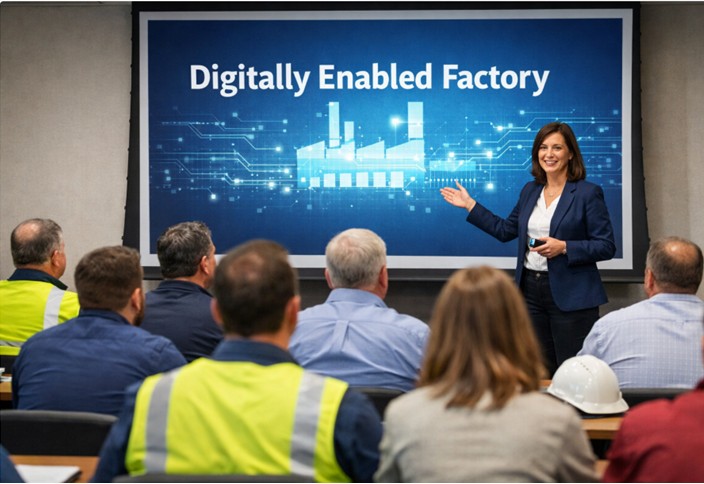
4. Digitally Enabled Factory
What it’s supposed to mean:
A factory connected by software systems—ERP, MES, design platforms, and data feedback loops.
What it often means in practice:
“We bought three apps that don’t talk to each other.”
My response:
Digital enablement isn’t about software count—it’s about integration. If supervisors still rely on clipboards and tribal knowledge, you don’t have a digital factory. You have subscriptions.
5. Scalable
What it’s supposed to mean:
A system or business model capable of growing without proportional increases in cost or complexity.
What it often means in practice:
“We hope someone funds us.”
My response:
Scalability shows up in repeat customers, repeat designs, and repeatable profits. If your pilot project barely broke even and required heroic effort, scaling it just scales the pain.
6. Net-Zero Ready
What it’s supposed to mean:
Buildings designed to achieve net-zero energy with the future addition of renewables.
What it often means in practice:
“Good insulation and better windows.”
My response:
Net-zero ready is fine—but only if affordability survives the conversation. High performance that prices out the buyer isn’t progress. It’s marketing.
7. Platform Approach
What it’s supposed to mean:
A standardized design and production framework that supports multiple configurations.
What it often means in practice:
“We don’t want to say ‘standardization’ out loud.”
My response:
Platforms work when everyone commits—sales, design, production, and installers. The moment sales treats the platform as optional, the platform collapses.
8. Resilience
What it’s supposed to mean:
Buildings that withstand climate events, supply disruptions, and long-term environmental stress.
What it often means in practice:
“We used stronger materials.”
My response:
Real resilience includes logistics, repairability, and speed of replacement—not just specs. If a building survives a storm but takes a year to repair, the system failed.
9. Factory as a Service (FaaS)
What it’s supposed to mean:
Shared or licensed factory capacity offered to multiple builders or developers.
What it often means in practice:
“We’re not sure who our customer is yet.”
My response:
FaaS only works with ruthless clarity around roles, margins, and responsibility. Otherwise, it becomes a finger-pointing machine when schedules slip.
10. Ecosystem
What it’s supposed to mean:
A coordinated network of designers, manufacturers, software providers, installers, and financiers.
What it often means in practice:
“We partner with everyone.”
My response:
An ecosystem without accountability is just a crowd. The best ecosystems have clear leadership, defined interfaces, and consequences when someone drops the ball.
Final Thought: Buzzwords Aren’t the Enemy—Avoiding Reality Is
Buzzwords don’t kill companies. Avoiding hard operational truths does. Most of these terms exist because they point toward something the industry genuinely needs: better performance, better predictability, better outcomes.
But every time a word replaces a measurable result, we lose ground.
If you want my attention, don’t lead with the buzzword. Lead with what changed, what it cost, what broke, what you fixed, and what you’d never do again.
That’s not marketing language.
That’s experience talking.