


Modular construction is a world abuzz with “experts.” Every week seems to usher in a new visionary touting the next big thing—a software solution, a disruptive app, or a revolutionary idea guaranteed to reshape how we build housing. Their promises are bold, and their pitch is simple: invest heavily, and you too can become a leader in the modular housing revolution.

.
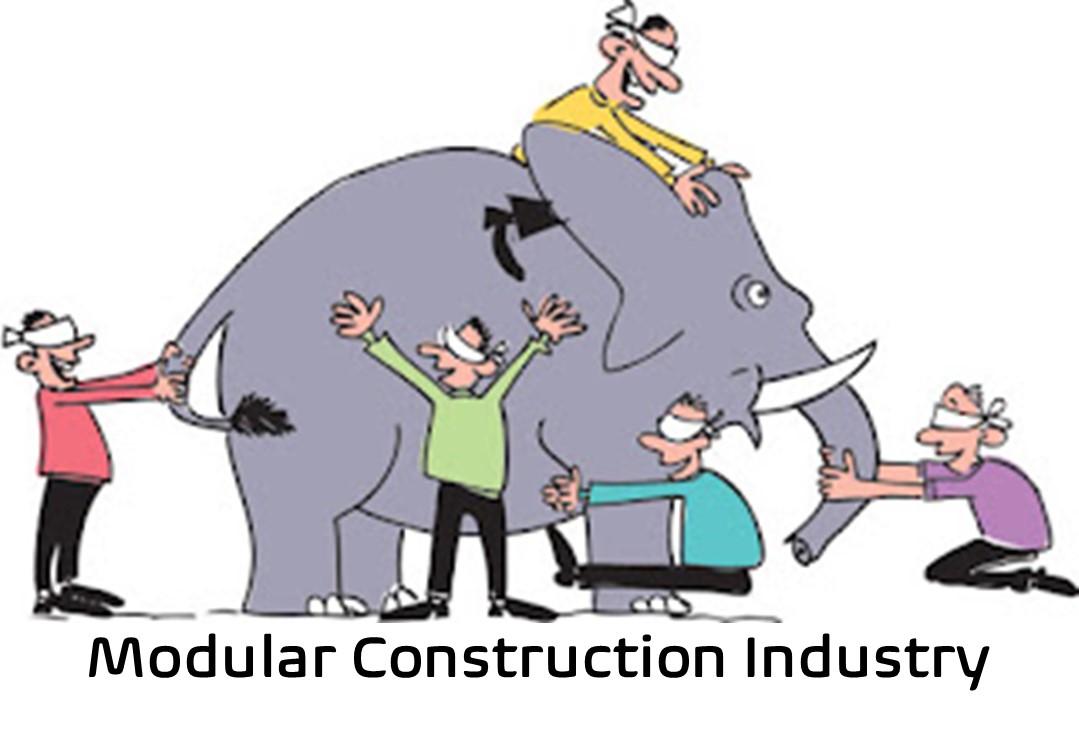
But amidst the symphony of advice, a discordant reality emerges: many of these “experts” have only touched a small piece of the proverbial elephant. Like a room full of blindfolded people trying to describe the beast, their perspectives are limited by what they’ve encountered. Is it a rope? A tree trunk? A wall? The truth depends entirely on their vantage point.
The Curious Case of the Steel Frame
A few years back, I invited a self-proclaimed modular construction “expert” to tour a factory with me. His first question as we entered the production line? “When does the steel frame get added?” It was a head-scratcher. Turns out, his prior experience consisted of visiting two manufactured home plants—an entirely different species in the construction jungle.
Fast forward to today, and the “experts” have multiplied, each confidently explaining modular construction at conferences, on Zoom calls, and in slick video interviews. Yet, the question remains: how much of the elephant have they touched?
Kool-Aid for the Investors
The real problem begins when these so-called experts address investors and developers. Hungry for innovation and blinded by enthusiasm, these audiences eagerly sip the Kool-Aid. The pitch? Modular construction is 25% cheaper, takes half the time, and can be delivered on demand. Sounds perfect, doesn’t it?
Except… it’s not reality.
Let’s debunk these myths:
- 25% Cheaper? Modular construction isn’t the budget bonanza it’s often made out to be. While some cost savings are possible, shaving 25% off a site-built project’s price tag is a pipe dream. Labor, materials, and factory overhead don’t magically vanish.
- Half the Time? Sure, modular construction can save time, but halving the schedule only works if you’re counting from the day the modules arrive on-site. The broader timeline—design, permitting, production—often takes longer than developers anticipate.
- On Demand? Factories don’t have the luxury of idling while developers wrestle with permits, financing, and tax credits. When delays hit—sometimes weeks or months—factories have to move on to the next project to stay afloat. No factory survives by sitting idle.
The Modular Reality Check
Imagine a factory producing 15 modules a week. A 75-module project ties up the production line for five weeks. If the project hits a last-minute snag, the factory can’t simply pause production—it has to keep building to pay the bills. This mismatch between developer expectations and factory realities is why some modular factories struggle or even close, despite a surge in modular project demand.
Why can’t factories just pass the project to another facility? Because there’s no national network of modular factories seamlessly collaborating. When delays occur, developers are left in the lurch, their projects marooned in limbo.
The Truth About Experts
The experts who paint modular construction as a silver bullet often overlook these hard realities. That’s why savvy developers should vet advice carefully. Before diving into a modular project, find a consultant with real-world experience.
Consider this cautionary tale: a developer spent months working with a modular factory’s sales team on a project, only to have the engineering department declare it unbuildable. The developer abandoned modular construction altogether, unaware that a nearby factory could have handled the job. A knowledgeable consultant could have bridged that gap.
The Bright Side of Modular Construction
Despite its challenges, modular construction offers undeniable advantages:
- Speed: While not half the time, it’s faster than traditional site-building when managed well.
- Quality: Factory-controlled environments produce consistent, high-quality results.
- Sustainability: Modular buildings are energy-efficient and generate less waste.
- Reliability: Factory workers show up daily, honing their skills in a stable environment.
The modular factory becomes more than just a builder—it’s a partner. Problems are identified early, solutions are proposed collaboratively, and clients can witness their modules coming to life on the production line. Meanwhile, groundwork and foundations are completed simultaneously, streamlining the process.
Winston Churchill’s Wisdom
Winston Churchill once remarked, “Democracy is the worst form of Government except for all those other forms that have been tried from time to time.” The same could be said for modular construction: it’s not perfect, but it’s often the best option available.
The Elephant in the Room
As modular construction evolves, so too must the discourse surrounding it. Beware the “experts” who’ve only touched a tail or a tusk. Instead, seek voices with a holistic understanding of the beast. Modular construction has immense potential—but realizing it requires clear-eyed realism, thoughtful planning, and the right partners.

After all, the elephant may be big, but it’s not impossible to grasp when you see the whole picture.
Gary Fleisher, The Modcoach, writes about the modular and offsite construction industry at Modular Home Source.
.

CLICK HERE to read the latest edition

Contact Gary Fleisher