


What a great second day at IBS in Orlando. My agenda was filled with experts in offsite and production construction explaining what offsite, modular, and components really are—and how to integrate them into building homes and commercial projects without turning your hair gray in the process. As someone who has been walking factory floors and job sites for more years than I care to admit, I’m always a little skeptical going into these sessions. Too often it’s the same buzzwords wrapped in new packaging. But this year, I found myself leaning in instead of glancing at my watch.
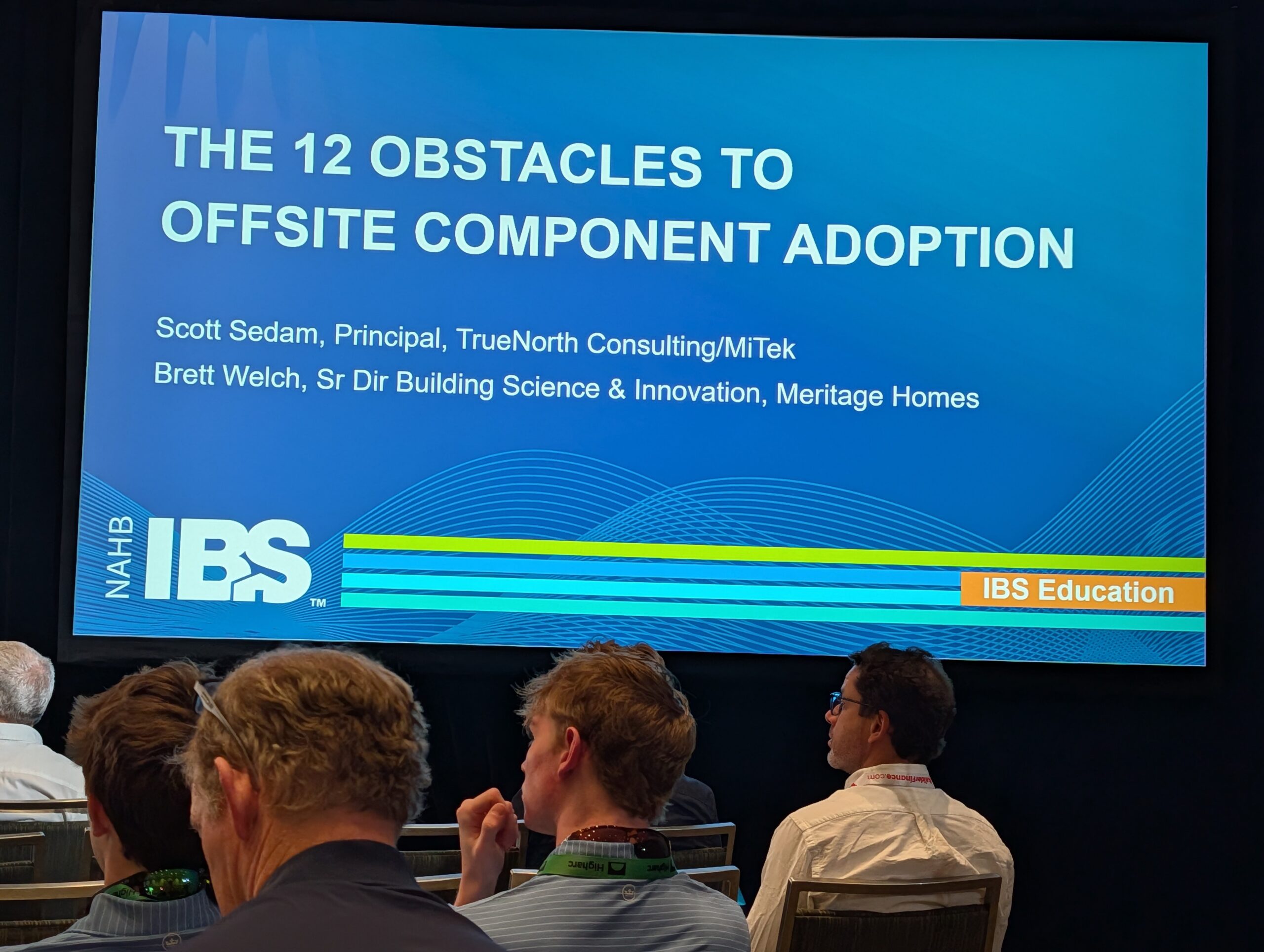
One speaker kicked things off by outlining the twelve biggest obstacles blocking offsite construction. Some were the usual suspects—financing, zoning, and outdated perceptions—but others were refreshingly honest. Resistance to change, fragmented decision-making, and the lack of early collaboration between designers, builders, and manufacturers were front and center. He made a point that hit home with me: most obstacles aren’t technical. They’re human. People get comfortable with what they know, even if it costs them time, money, and sleep. Watching the audience nod along, I realized many of them were finally seeing themselves in the problem.
Another session focused on missed opportunities in using components. Not modular. Not full panelization. Just smart, practical use of components that could shave weeks off a schedule and dollars off a budget. The speaker showed real-world examples where builders adopted roof trusses, wall panels, pre-hung doors, and even bathroom pods, yet still insisted they were “stick builders.” He challenged the audience to rethink identity. You don’t have to go all-in on volumetric to gain the benefits of offsite. Every project has a starting point. That message resonated with builders who have been hesitant to take the leap.
A third presentation explored the benefits of small planned communities. Not mega-developments, not cookie-cutter sprawl, but thoughtfully designed neighborhoods that balance affordability, livability, and speed to market. The idea wasn’t just to build houses faster. It was to build better communities by aligning design, infrastructure, and production methods from day one. The discussion around zoning flexibility and community acceptance was especially lively. It reminded me that the housing crisis isn’t just about building units—it’s about building places people actually want to live.


But the one that really held my attention was a speaker who flipped the conversation entirely. Instead of talking about cost savings, he talked about profit creation. His focus was simple but powerful: every step of a project—from design to planning to production—should be viewed as a profit center, not an expense. Design, he argued, is where the biggest financial mistakes happen. When architects, engineers, and manufacturers collaborate early, they don’t just prevent problems; they create efficiencies that increase margins. Standardization, digital twins, and repeatable processes aren’t just operational tools—they’re financial strategies.
He went further, explaining that planning and preconstruction are where developers either win or lose before the first shovel hits the ground. If logistics, scheduling, and supply chains are integrated early, production becomes predictable. Predictability attracts investors, lenders, and partners. And in today’s capital-sensitive environment, predictability is worth more than almost anything else. When factories, builders, and developers share data and incentives, the entire project moves from reactive to proactive. Suddenly, the conversation shifts from “How do we cut costs?” to “How do we increase value?”
In all, I had a great day at the International Builders Show. I walked out of the sessions energized, hopeful, and reminded why I still love this industry. Yes, there were still a few boring speakers and the occasional sales pitch disguised as education. But there were also moments of clarity, honesty, and real progress. And on a day when that happens, it feels like we’re moving the ball forward—even if it’s only a few yards at a time.
.
With more than 10,000 published articles on modular and offsite construction, Gary Fleisher remains one of the most trusted voices in the industry.
.
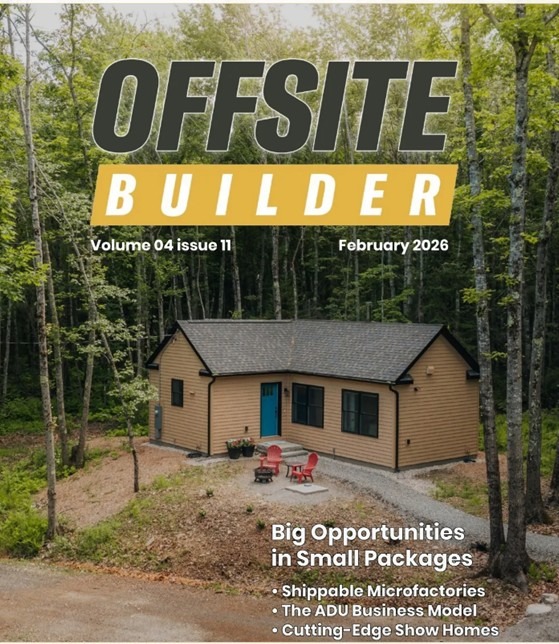
CLICK HERE to read the latest edition

Contact Gary Fleisher