






The Quiet Rise of Light-Gauge Steel in Offsite Construction
For years, when most people in construction thought about modular housing, they pictured a ranch home arriving on two carriers with a hinged roof and a marriage wall down the middle. Even today, many zoning officials, developers, lenders, and even some builders still assume modular construction begins and ends with single-family homes.
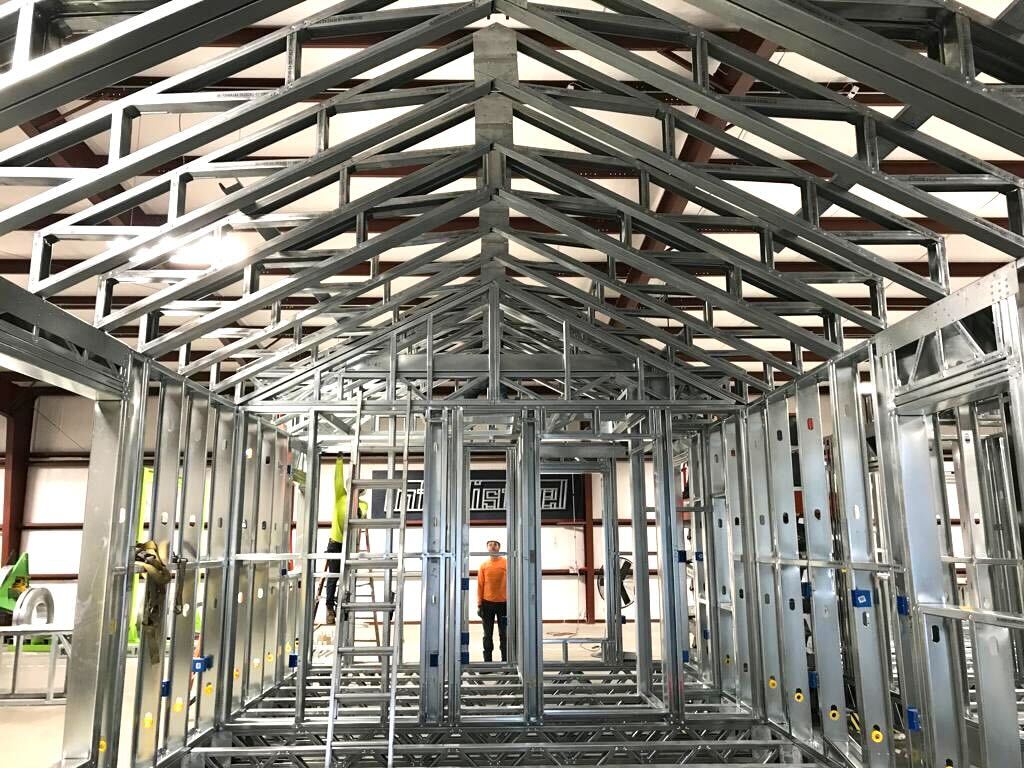
That perception is changing rapidly, and one of the biggest reasons is the rise of light-gauge steel-framed modular construction, commonly referred to as LGS. Quietly and without much public attention, LGS modular construction has been pushing modular buildings higher and higher into the skyline. What started as a niche framing system for commercial structures and specialty projects is now becoming one of the most important technologies in the future of mid-rise and even high-rise offsite construction.
The interesting part is that many people inside the construction industry still do not fully understand how tall modular construction can actually go.
The Real Answer Isn’t Simple
Whenever someone asks me how many stories can be built using LGS modular construction, I always tell them that the answer depends on who is asking.
If you ask a factory owner, they may tell you six stories because that is what their production line is currently optimized to build. If you ask a structural engineer, they may tell you twenty stories or more because they understand the mathematics and structural systems involved. Transportation companies may answer differently depending on bridge clearances, escort requirements, and state regulations. Meanwhile, some local building inspectors may hesitate to approve buildings above three stories simply because they have never approved a taller modular project before.
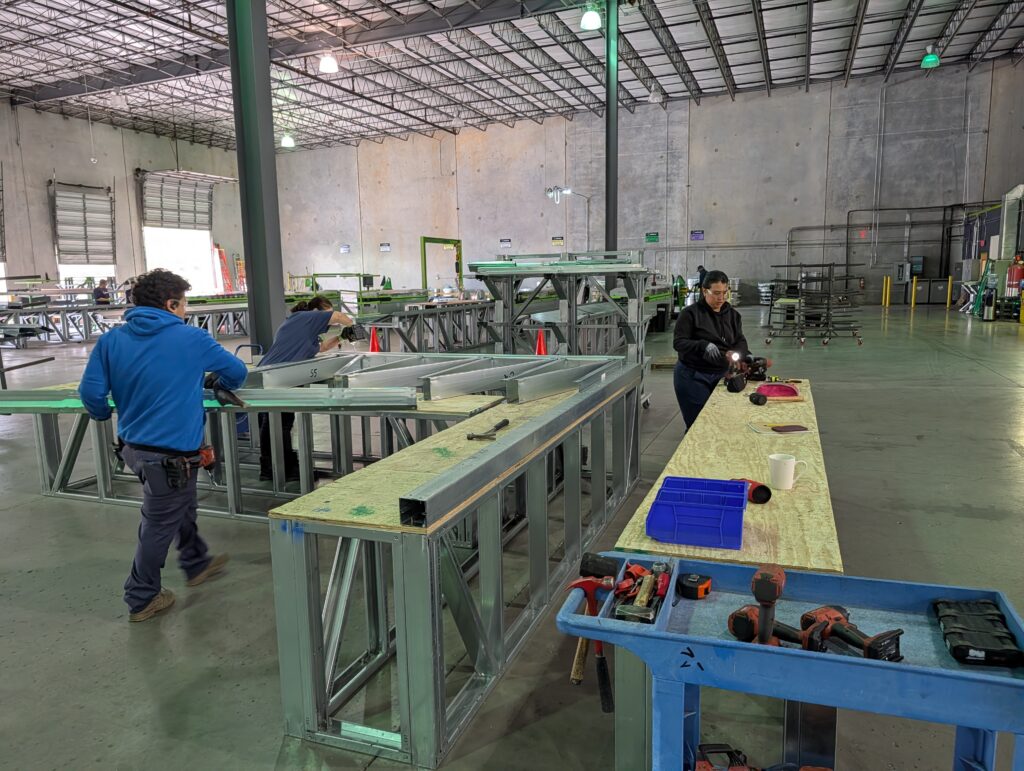
The reality is that light-gauge steel modular buildings have already been successfully constructed around the world, ranging in height from single-story homes to buildings exceeding 20 stories. The limiting factor is rarely the steel itself. More often, the limitations involve logistics, engineering complexity, local code requirements, financing concerns, transportation restrictions, and sometimes the simple fear of doing something new.
Why Light Gauge Steel Changed the Conversation
Wood framing remains dominant in most modular factories across North America, and for good reason. Wood is familiar, relatively inexpensive, easy to work with, and supported by a massive labor force and supplier network. But as buildings get taller, wood faces challenges related to shrinkage, moisture, movement, fire resistance, and stacking limitations.
That is where LGS begins to shine.
Light-gauge steel offers several important advantages for taller modular construction. It is dimensionally stable, meaning it does not shrink, twist, warp, or absorb moisture the way wood can. It also provides an excellent strength-to-weight ratio, which is critical when stacking modules on top of one another to heights of multiple stories. Fire resistance is another major advantage, particularly in urban multifamily projects where stricter codes and insurance requirements apply.
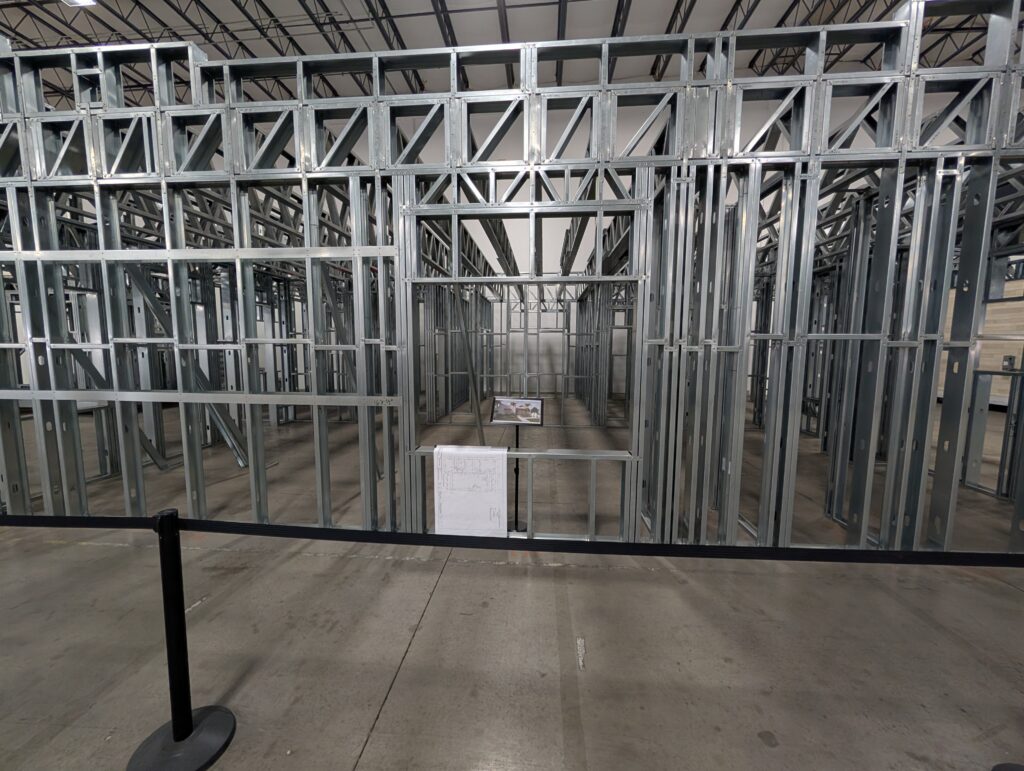
For developers working in dense urban environments, steel modular systems can simplify compliance with local building requirements while offering greater structural predictability. That combination of strength, consistency, and code performance is why LGS modular systems are becoming increasingly attractive for multifamily apartments, student housing, hotels, senior living projects, and workforce housing developments.
How Tall Can LGS Modular Buildings Go?
Here’s the general breakdown as the industry currently sees it.
1–3 Stories
This range is very common and relatively straightforward. Many modular apartment projects, hotels, student housing developments, and workforce housing projects fall into this category. At this height, modular construction is already highly competitive because transportation, engineering, and installation are relatively manageable.
4–8 Stories
This is becoming the sweet spot for many urban modular projects. LGS performs extremely well in this range because steel is dimensionally stable, lighter than concrete, and easier to engineer for stacking loads. Developers can often achieve significant schedule reductions while maintaining high levels of structural performance and quality control.

This is also where many factories are quietly finding profitability. Rather than chasing attention-grabbing skyscrapers, they are refining repetitive mid-rise projects that can be built efficiently, transported economically, and installed quickly.
10–20+ Stories
This level is entirely possible, but projects typically transition to hybrid structural systems. At these heights, most projects combine LGS modular units with structural steel or concrete cores for elevators, stairwells, and lateral stability. The modules themselves may still be fully LGS framed, but they become part of a larger integrated structural system.
Some notable modular high-rise projects around the world have already reached impressive heights. Projects in the UK have climbed to approximately 25 stories, while proposals in Asia and the Middle East have exceeded 30 stories. Several modular hotels and apartment buildings in the U.S. and Europe have also successfully reached the 10- to 20-story range.
One thing many people misunderstand is that the module itself does not necessarily have to carry the entire building load independently. In taller projects, engineers often design sophisticated support systems that include structural steel podiums, concrete parking decks, reinforced elevator cores, external bracing systems, and hybrid steel-and-concrete support frames.
The LGS modules then act as highly engineered volumetric components integrated into the overall structural system rather than functioning as isolated stacked boxes.
The Economics Change with Height
One of the realities many startups fail to appreciate is that taller modular projects do not simply scale upward in a straight line financially. Every additional story introduces layers of complexity that affect engineering, transportation, installation, and financing.
Engineering costs increase dramatically. Crane coordination becomes more demanding. Transportation planning grows more complicated. Tolerance requirements tighten, inspections become more extensive, and lenders begin asking tougher questions about risk management and project execution.
This is why some modular startups become obsessed with chasing massive high-rise projects before mastering smaller, repetitive projects. They see headlines about proposed twenty-story towers and assume that is where the future profits must be hiding.
In many cases, the opposite is true.
The factories quietly making money today are often the ones producing repetitive four- to six-story apartment projects with disciplined production systems, experienced installation crews, repeat developers, and predictable schedules. Those factories do not usually get media attention. They are simply building efficiently and profitably.
Transportation Still Rules Everything
No matter how advanced modular engineering becomes, every module still has to travel down a public highway. That reality continues shaping the future of modular construction more than many people realize.
Transportation regulations vary from state to state and province to province. Width limits, height restrictions, escort requirements, bridge clearances, and allowable travel hours all influence module design. As buildings get taller, the structural requirements for each module often increase, which can also increase transportation challenges.
This is one reason why some developers and modular companies are experimenting with smaller volumetric sections, panelized hybrid systems, and partially assembled modular components that reduce transportation limitations while still preserving offsite manufacturing efficiencies.
The future of LGS modular construction may not always involve shipping fully completed boxes. Increasingly, it may involve sophisticated hybrid systems that combine volumetric modules, panelized assemblies, and on-site integration methods.
Urban Housing May Push LGS Forward
As cities continue to struggle with workforce housing shortages, labor shortages, rising construction costs, and affordability pressures, LGS modular systems may find themselves at the center of future urban housing strategies.
Cities need faster construction methods. Developers want predictable schedules. Lenders are looking for ways to reduce risk. Owners want durable, code-compliant buildings delivered more efficiently. LGS modular systems answer many of those concerns.
That does not mean every project will automatically succeed. The modular industry still faces challenges related to financing, zoning resistance, education, inexperienced developers, and factory execution issues. But the technical capabilities of LGS modular systems are no longer the limiting factor many assume.
The technology has already proven itself. Now the industry must prove it can consistently execute projects profitably at scale.
Modular Construction Is Growing Up
For decades, modular construction was often treated like the “alternative” side of the building industry. Many developers viewed it as experimental or only suitable for niche applications. That era is beginning to fade as LGS modular construction helps shift modular construction from smaller residential projects to larger mainstream commercial and multifamily developments.
The industry is slowly evolving from conversations about whether modular works into conversations about where modular works best. That is a very different discussion from the one we were having twenty years ago.
Perhaps the most important lesson of all is this: the future winners in modular construction may not be the companies trying to build the tallest buildings. They may be the factories and developers who quietly learn how to repeatedly build the same five-story building exceptionally well, over and over again.
Because in construction, consistency almost always beats headlines.
Modcoach Observation

I’ve noticed something interesting over the years. Whenever someone new enters offsite construction, they immediately want to build the biggest, tallest, most revolutionary project anyone has ever seen. It sounds exciting in investor meetings and looks impressive in press releases.
Meanwhile, the factories quietly making money are usually focused on something far less glamorous. They are figuring out how to shave twenty minutes off a production station, reduce service calls by 15%, improve crane set coordination, and deliver the same building on time over and over again.
That’s where the real future of modular construction probably lives—not in chasing records, but in mastering repetition.