






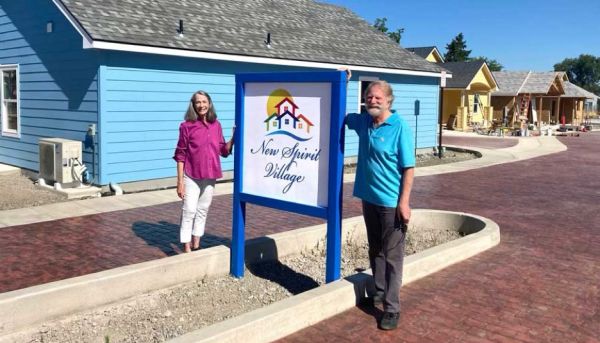
Something subtle — and dangerous — is happening in Oregon.
Affordable housing providers, some of the most seasoned in the country, are quietly struggling to stay afloat. Budgets are breaking. Vouchers are freezing. Projects once considered “sure things” are stalling. And if you think this is an Oregon-only story, think again.
What’s unfolding in the Pacific Northwest is a preview of what could hit the rest of the country if we don’t pay attention.
This isn’t a drill.
This is a warning.
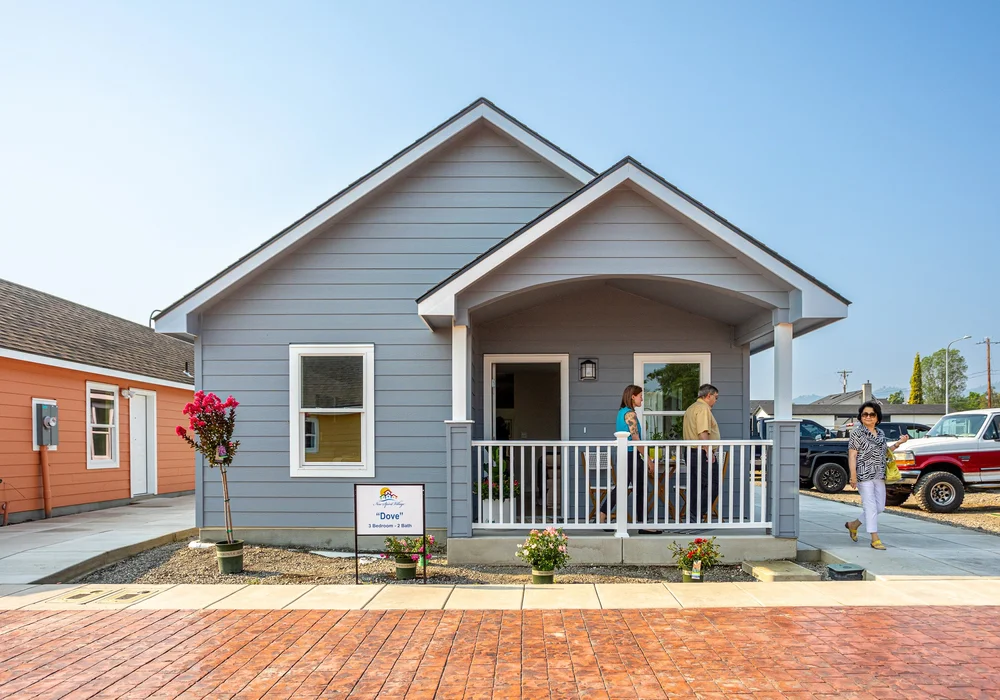
All Photos – New Spirit Village in Oregon – https://newspiritvillage.org/
Oregon’s Early Symptoms Are a National Diagnosis
When a major housing authority in a large metro area pauses new vouchers, cuts staff, and announces a multimillion-dollar gap, that’s not a “local bookkeeping issue.” It’s a sign the math behind affordable housing is no longer penciling out — even for experienced managers with decades of steady operations.
The reasons in Oregon are painfully familiar to anyone working in housing nationwide:
- Construction costs rising faster than subsidies.
- Operating costs rising faster than rents (even “restricted” rents).
- Bond money and federal grants drying up after one-time injections.
- A boom-and-bust cycle of political attention and budget support.
- A surge in need from extremely low-income households — far beyond what existing programs were designed to handle.
If Oregon — a state that has spent billions, embraced zoning reforms, and pushed aggressively for housing production — is struggling, what does that say about states that haven’t invested nearly as much?
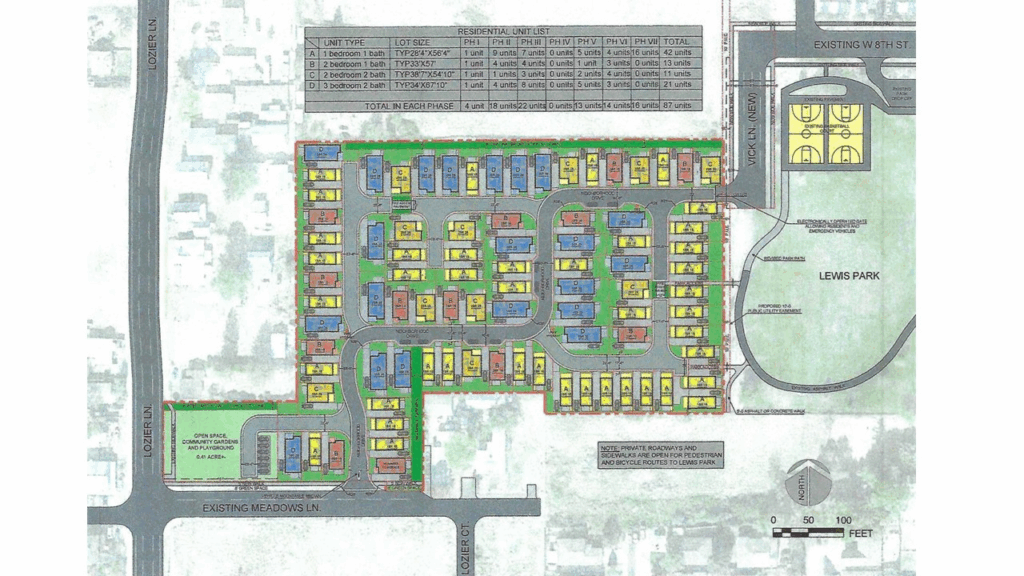
Modcoach Note: I have no idea if New Spirit Village is affected by what is happening in Oregon. I simply love their approach and wanted to share their pictures and link. I wish them much success!
What Happens in Oregon Won’t Stay in Oregon
Affordable housing in America operates on a thin financial edge. A few wrong variables — interest rates, construction spikes, labor shortages, tightened bank covenants, or frozen federal funds — and the entire ecosystem tips.
The early cracks showing in Oregon could spread in three unavoidable ways:
1. Fewer Units Will Be Built Everywhere
Affordable housing already costs more to build than market-rate housing in many regions. If funding streams shrink or construction inflation spikes again, developers will cancel or delay projects they can’t carry financially.
Even states with ambitious housing targets — California, Colorado, New York, Washington — will find their “goals” turning into wish lists.
2. Providers Will Shift From “Expanding” to “Surviving”
Nonprofits and public housing authorities are not immune to cashflow problems. When operating deficits rise, mission-driven builders shift from “How many families can we house?” to “Can we keep the roofs we already own from leaking?”
That’s when the backlog grows — silently — year after year.

3. The Most Vulnerable Tenants Will Pay the Price
Extremely low-income renters (seniors, disabled individuals, hourly workers) already face impossible odds.
When agencies freeze vouchers, close waitlists, or delay new units, these tenants have nowhere to go except overcrowded apartments, unstable motels, or shelter tents.
The national numbers are brutal: for every 100 extremely low-income renters in the U.S., only 33 affordable units exist. If Oregon’s trend spreads, that gap will widen everywhere.
Why This Is a Construction-Industry Problem Too
Let’s be candid: construction firms don’t survive on good intentions. They survive on steady pipelines.
Affordable housing was supposed to be that steady pipeline.
States across the country counted on thousands of LIHTC projects, modular builds, public-private partnerships, supportive housing complexes, and rapid-delivery units to meet production goals. But if housing authorities can’t fund operations or landlords can’t cover maintenance costs, the pipeline collapses — and so does the construction activity that feeds from it.
Modular factories, lumber mills, tradespeople, architects, inspectors — they’re all tied into this ecosystem. When affordable housing financing stalls, everyone feels it.
The Threat Nobody Wants to Admit
Here is the uncomfortable truth the industry avoids saying out loud:
Affordable housing is becoming financially unsustainable in the very places it’s most needed — because the economic model hasn’t kept pace with reality.
The “deep subsidy” needed to house extremely low-income residents has grown dramatically, but the funding to support that subsidy has not.
Construction costs have skyrocketed.
Land is more expensive.
Operating costs keep climbing.
And the public expectation that providers will “build us out of this crisis” has become disconnected from basic financial math.
Oregon was simply the first to say the quiet part publicly.
If Nothing Changes, Here’s the National Future We’re Sleepwalking Toward
- More states freezing voucher programs
- Fewer affordable units reaching groundbreaking
- An uptick in housing authorities declaring financial emergencies
- A collapse of acquisition/rehab projects due to cost overruns
- Nonprofit developers merging or closing
- Modular and offsite factories losing affordable-housing contracts
- Longer waitlists, fewer exits from homelessness, and higher turnover in subsidized buildings
None of this is theoretical. Oregon is already living it.
The rest of the country is simply six to twelve months behind.
So What Must Happen?
If states want to avoid Oregon’s trajectory, they’ll need to stabilize the foundation:
Boost sustainable operating funding
Not just construction dollars. The long-term operating budgets need support or units will fail after they’re built.
Accelerate factory-built and offsite approvals
Streamlined codes, statewide approvals, and predictable inspections can shave months and millions off delivery.
Invest in extremely low-income housing specifically
This is where the financial gap is widest and the need greatest.
Provide long-term guarantees on subsidies and vouchers
Developers can’t close financing with unpredictable annual renewals.
Reform land-use rules to reduce acquisition costs
Zoning alone won’t fix the crisis, but avoiding $2M-per-acre land is a good start.
Just My Opinion: Oregon Isn’t the Outlier — It’s the Canary
If you work in housing, construction, modular manufacturing, land-use planning, or community development, pay attention to what’s happening in Oregon right now.
The warning signs aren’t subtle.
The financial model for affordable housing is cracking under pressure.
When the canary stops singing, the smart miners don’t argue.
They get out, rethink the plan, and reinforce the tunnel before everyone suffocates.
The rest of the country is running out of time to do the same.
.
With more than 10,000 published articles on modular and offsite construction, Gary Fleisher remains one of the most trusted voices in the industry.
.

CLICK HERE to read the latest edition

Contact Gary Fleisher